

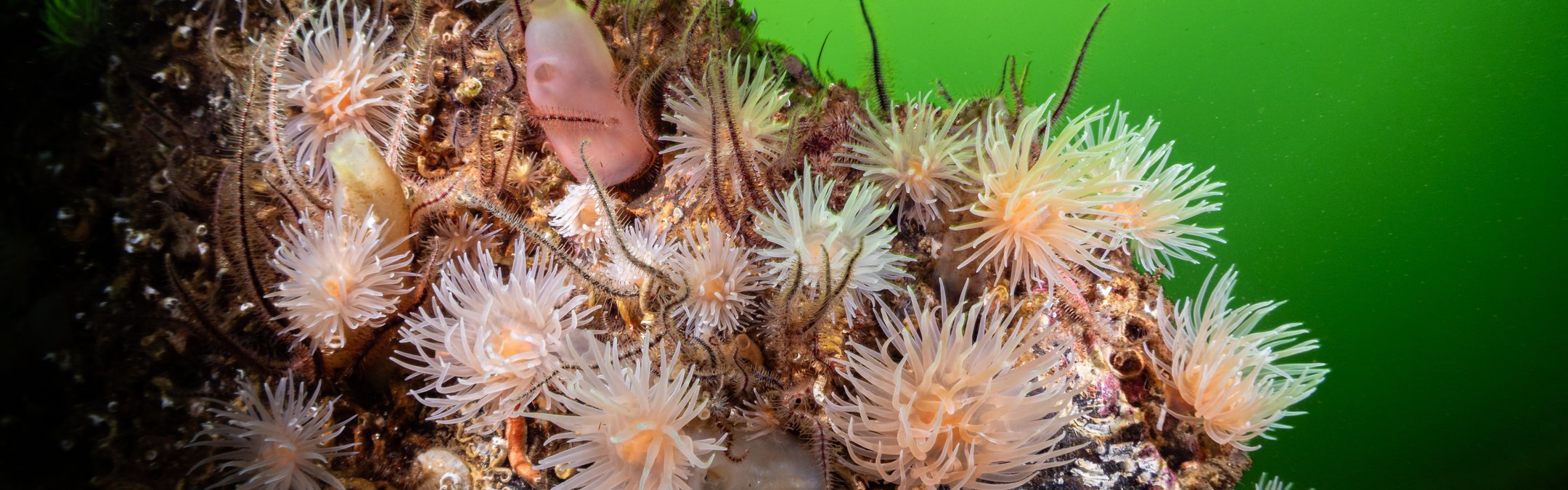
A close up of Loch Leven's reef. Sea anemones and brittlestars can be laying on an outcrop of rock. The sea around it is green.

Positive ocean news: September ’26 edition

24 Sep 2026

2 minute read

Discover the latest wins for our ocean with this month’s round-up of positive ocean news.

Thousands head to coastline in nation-wide beach clean event
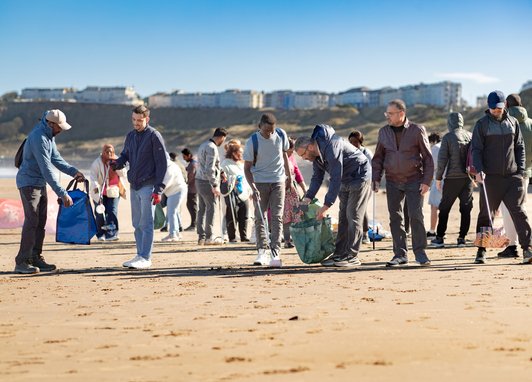
Across the UK and Channel Islands, thousands of volunteers joined together to clean up beaches and record important data about the types of litter polluting them. 

This year’s Great British Beach Clean saw more than 300 events take place, with workplaces, communities, schools and politicians getting involved. Throughout the annual 10-day event delivered by the Marine Conservation Society, volunteers recorded the litter they found on a 100-metre stretch of beach. This feeds into a decades-long dataset which tracks the types and sources of marine pollution found on the UK’s shores and acts as evidence to campaign for legislation that reduces pollution.

A group of beach cleaners holding waste bags and litter pickers on a snady beach. The sun is shining off camera, leaving shadows on the beach under them.

Scarborough GBBC event  |  Image credit: Matthew Johnstone

The data collected on drinks litter, such as plastic bottles and caps and tins, will help assess the impact of the UK’s incoming Deposit Return Schemes in 2027 in preventing this type of litter.

Consultation offers chance for further protections in Scotland’s Marine Protected Areas
After 10 years of advocacy by the Marine Conservation Society and partners, a consultation is finally underway which could see fisheries management measures protect over 160 sites and areas across Scotland’s inshore waters. 

Measures are proposed for the 76 inshore Marine Protected Areas that still lack them, and dozens of management areas to protect 11 of the Priority Marine Features which are most vulnerable to the impacts of bottom-towed fishing gear such as trawls and dredges.

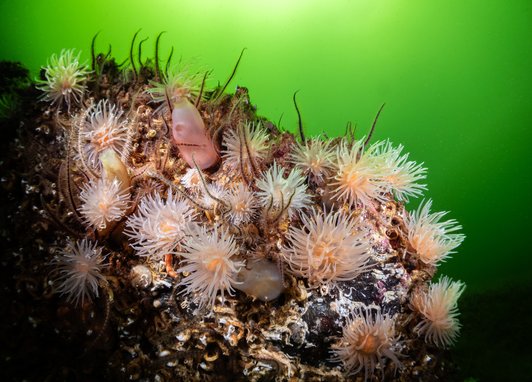
A close up of Loch Leven's reef. Sea anemones and brittlestars can be laying on an outcrop of rock. The sea around it is green.

Loch Leven reef  |  Image credit: James Lynott

The public, communities, businesses, environmental organisations and fisheries stakeholders are invited to share their views on the measures and have until January 2027 to respond. 

As part of its leading role in the Scottish Environment LINK Save Scottish Seas project, the Marine Conservation Society will be gathering public support for the options that will give the sites the best protection possible.

Read more on the Scottish Legal News website

New map tracks two decades of jellyfish sightings
The new Jellyfish Sightings Explorer provides a live map of the jellyfish spotted around the UK and Ireland, enabling users to see which species and how many have been reported. 

The website uses data from the Marine Conservation Society’s Jellywatch programme, in which members of the public report any jellyfish they see. Tracking these sightings helps scientists to monitor populations and understand how they may be impacted by climate change.

Using the Jellyfish Sightings Explorer, users can search by location, species and date – as far back as 2003, when the programme launched. 

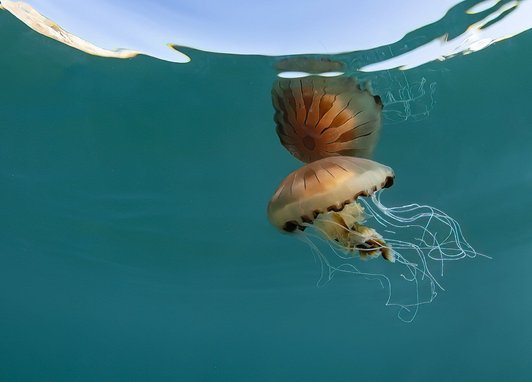
A compass jellyfish swimming near the surface of clear blue water, it is being partially reflected back from the surface making it seem like the surface is a mirror

Compass jellyfish  |  Image credit: Alison Pettitt

For the first time, people can explore over two decades of jellyfish sightings, with each observation contributing to a powerful nationwide picture, helping us to understand our seas and the ways in which they are changing. This really shows the impact of citizen science!

Anna Bunney, Citizen Science Programme Developer at the Marine Conservation Society

Eleven-year-old runs 77km to raise vital funds for conservation
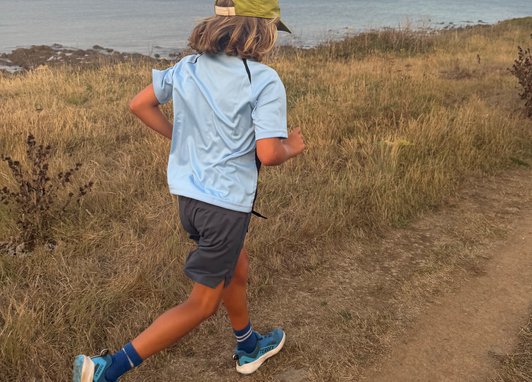
Orkney, 11, has completed his fourth fundraising challenge in support of the Marine Conservation Society and Scilly Wildlife Trust. 

Orkney started fundraising for us when he was just seven years old and has tackled challenges including a 55km run, a half marathon and a triathlon. His latest, and biggest, efforts saw him run 77km – from Cornwall to Scilly – over seven consecutive days.

He has achieved almost double his fundraising target of £1,000. 

A young boy running along a dirt path. The coast is behind him. He has his back away from the camera and is weiring a lime green cap and blue t-shirt.

Orkney running along the coast  |  Image credit: Samaya Reid

Orkney’s mother, Samaya, said, “He was incredible during his challenge. The community came out to support him and his finish line on the seventh day was amazing; so many people were there to cheer him across the finish line. 

Earlier this month, Orkney was at the BBC Cornwall Make a Difference Awards, where he won the ‘Young hero’ award for all his fundraising efforts. “As you can imagine, I was bursting with pride,” said Samaya, “it’s just so wonderful to see him recognised for everything he has done over the years."

Polling reveals widespread public support for government action on ocean health
The majority (59%) of the UK public want the seas’ health recognised as critical national infrastructure by the UK Government.   

Conducted by YouGov on behalf of the Marine Conservation Society, the findings reveal the UK public’s attitudes on government action on ocean pollution, maintaining ocean health, and the threats facing UK seas. 

Half of the public surveyed believe that the UK Government is currently doing too little to maintain ocean health, with sewage and chemical pollution, litter, and climate change identified as the biggest threats.

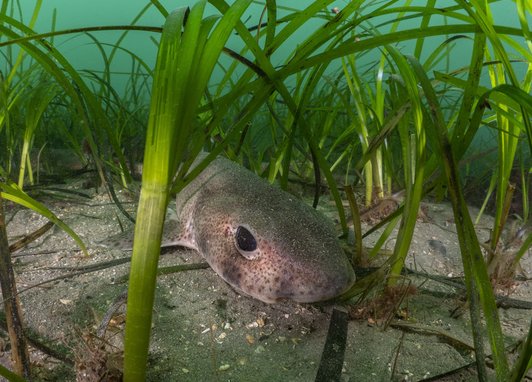
A cat shark rests on the ocean floor surrounded by seagrass. It is face-on, with big black eyes and speckled skin.

A catshark hiding in seagrass  |  Image credit: Sharron Moran, Ocean Image Bank

The survey follows the launch of the Ocean Security report, which warns that the health of the UK’s seas is fundamental to the nation’s economic, food and energy security – and the potential cost of failing to restore and protect them.  

Sandy Luk, Chief Executive at the Marine Conservation Society, said, "The public understands the value of our seas and wants our political leaders to protect them … Ocean recovery must be at the heart of any credible plan for a secure, resilient and prosperous future.”

Rescued sea turtles returned to the wild
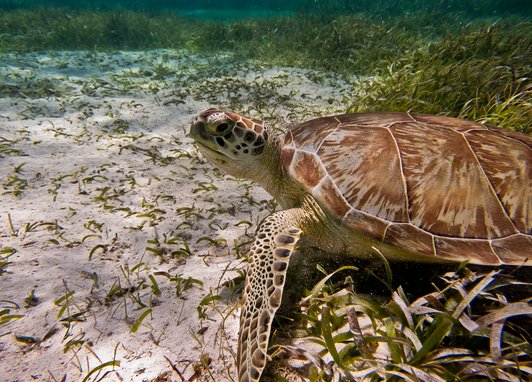
A loggerhead turtle washed up on a Jersey beach in January 2026 has been released back into the wild, after six months of rehabilitation. 

Crush was returned to the water off the Azores along with two other loggerheads – Eden and Tiree – that were rescued in 2025. Crush and Tiree were both nursed back to health at Weymouth's Sea Life centre, while Eden recuperated at Brighton Sea Life. 

The three turtles were flown 1,500 miles to be released in their native waters; loggerheads live in subtropical waters but sometimes end up washed up on UK shores when strong winds or currents knock them off course. 

A loggerhead turtle facing to the left. It is laying on seagrass. Sand can be seen to the left of it.

Loggerhead turtle  |  Image credit: Tom Shelley

Crush was released with a satellite tag, so the team at Sea Life can monitor where she is over the next few months.

New project aims to improve knowledge of England’s sharks
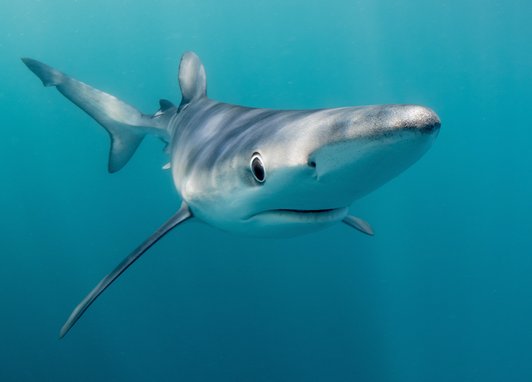
A collaboration between the University of Exeter, the Marine Biological Association, the Angling Trust and the Pat Smith Database will explore the feeding, mating and migrating patterns of three vulnerable shark species in England. 

Following the award of almost £1 million from Natural England, the three-year project will focus on some of the most vulnerable sharks in English waters: the porbeagle, tope (school) sharks, and blue sharks.

Blue shark  |  Image credit: Jon Bunker

The team will also monitor how shark populations are changing – in number and distribution – to inform conservation efforts. Key to this will be the sightings from recreational anglers, of which there are around three million in the UK.

Restored native oyster reef shows promising results
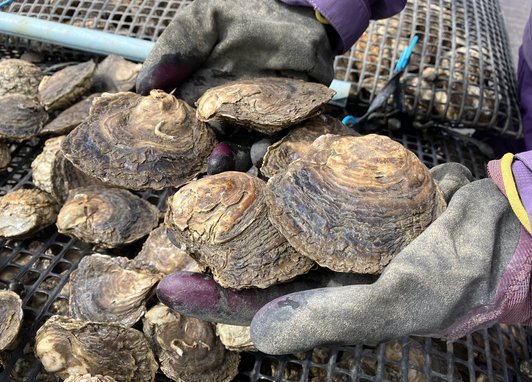
Native oysters on a newly restored reef in the North Sea appear to be thriving, surveys have shown. The oysters were deployed one year ago in special ‘reef cubes’ which are already acting as habitats for fish and crustaceans. 

The work is being carried out as part of a five-year restoration project, Wild Oyster Project: Tyne and Wear, by the Zoological Society of London (ZSL) and Groundwork NE & Cumbria.

A loved hand cupping a collection of oysters

European flat (native) oyster  |  Image credit: Sue Burton

The reef covers one hectare of coast and is made up of 20 oyster reef cubes, which were seeded with 4,000 adult oysters, as well as 60,000 juvenile oysters. Recent surveys reveal that 99% of the adult oysters are alive and healthy, and that the juveniles survived the winter too. 

The team are now working to trial new restoration techniques and build on the early success of the reef.
Marine Conservation Society

24 Sep 2026