

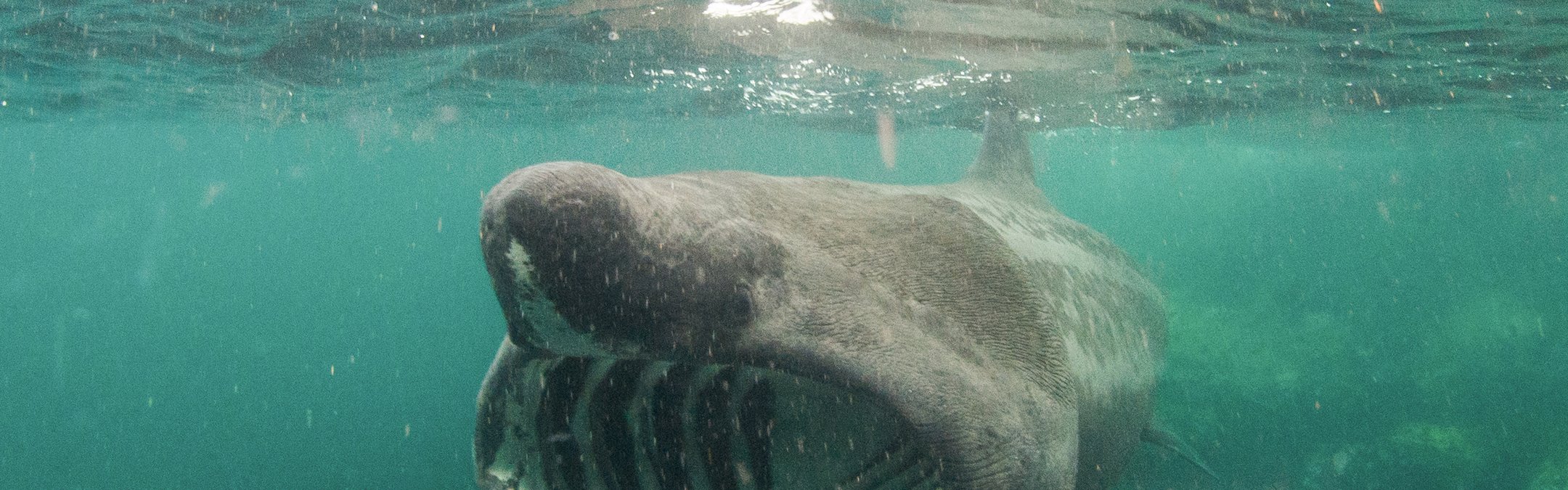
A basking shark swims facing face-on slightly off centre from the camera. As a filter feeder, its mouth is wide open showing its white gill rakers clearly against the dark of its mouth. The water is teal and looks like plankton is floating.

Positive ocean news: July '26 edition

28 Jul 2026

1 minute read

Need a mood boost? Discover the latest ocean wins, including the release of thousands of tiny baby lobsters, a new atlas celebrating sea slugs, and inspirational teens tackling plastic pollution. That’s definitely cause for celebration.

Big Seaweed Search celebrates 10-year partnership
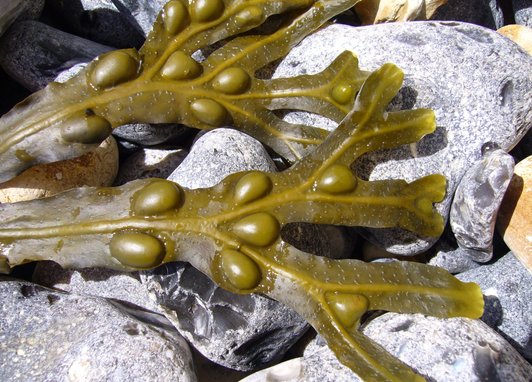
This year marks a decade of the Marine Conservation Society and the Natural History Museum working together to inspire thousands of volunteers to become citizen scientists through the Big Seaweed Search.  

Seaweed is an indicator species, meaning it can help paint a picture of how seas are changing and responding to certain conditions. Thanks to records collected by people around the UK, the project has helped build a clearer picture of how our changing climate is affecting our coastlines. 

The citizen science activity can be carried out year-round and each survey will help protect our incredible ocean, one seaweed survey at a time. 

Get involved with the Big Seaweed Search

Image credit: Lucy Robinson

Conservation charity achieves lobster release milestone
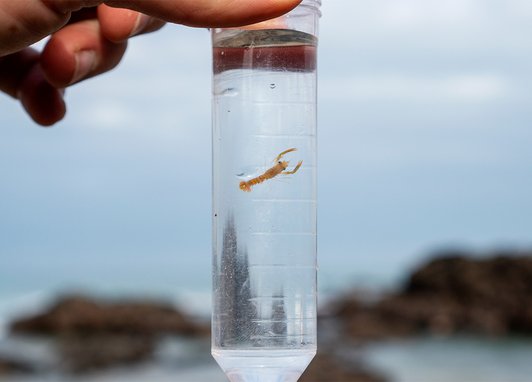
The National Lobster Hatchery in Padstow, England has already released more lobsters in the past three months than in the whole of 2025.  

Thousands of baby lobsters have been released since April, with snorkel, boat and public releases used to transfer the tiny animals to the sea.  

Due to fishing pressure, the UK’s European lobster population is vulnerable to catastrophic stock collapse. The National Lobster Hatchery aims to boost and protect lobster numbers, with more than half a million lobsters released since 2001.

Read more on the National Lobster Hatchery Website
In a small test tube filled with water, there is a tiny juvenile lobster ready to be released into the wild as part of the hatchery release in St Agnes.

Image credit: Mat Arney

New online atlas celebrates UK sea slugs
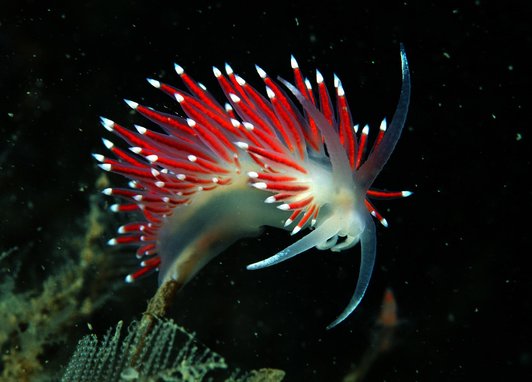
A brand new, free website bringing together the many species of nudibranchs found around the UK has been launched. Created by Ben Wilkie, an ecologist from Devon, the UK Nudibranch Atlas includes photos, distribution maps and up-to-date taxonomy for 159 different species. 

Ben said, “After joining a Coastwise rockpooling session and later going nudibranch spotting at Croyde with a local ranger, I realised there wasn't a simple resource for beginners to discover the amazing biodiversity of UK sea slugs and other marine gastropods. So, I decided to build one."  

The website is populated using distribution data from publicly available biodiversity datasets and will be updated over time. 

Learn more about sea slugs
A white ethereal sea slug has long red porcupine-like spines extending from its back with white tips. It is striking photography with a black background.

Image credit: Paul Naylor

Fishing ban may be factor in orca sightings increase 

Orcas have been appearing much more regularly around the Farne Islands than ever before, with cetacean experts saying this could be an indication that the health of the marine ecosystem is improving.

Andrew Douglas, who owns a boat touring company for the islands, has seen the increase in sightings himself, and believes the recent UK government ban on sandeel fishing – a key food source for many marine species – may be a contributing factor. 
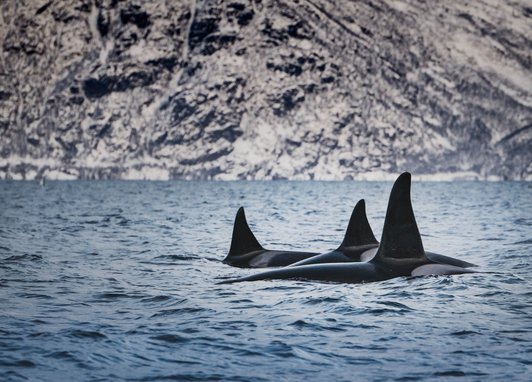
He said, “That’s the best thing the government’s done so far. They banned it about two years ago, and that’s made a massive difference straight away … Things have just started to come back. So, you’re starting to see a lot more mackerel now, a lot of herring now, so I think these orcas are attracted to all that food.” 

Researchers say it could also be due to better publicised sightings and presence on social media, as well as growing populations or orcas moving inshore. 

Read more on the Guardian website
Three orcas can be seen swimming with just their backs and tall dorsal fins above the water. In the background is an icy, dark rocky cliff face.

Image credit: Bart Van Meele/Unsplash

Teens run campaign tackling single-use water bottle waste 

Teenagers in Porlock, a village in Somerset, have set up a campaign to encourage local businesses to stop selling bottles of water and instead, offer free water refill station.
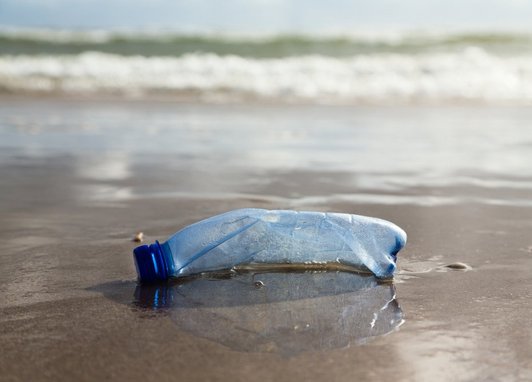
So far, the group – called While We Still Can – has got commitment from 85% of the village’s businesses, resulting in 17 refill stations – one of which is open 24/7.  The campaign has received support from brands, including reusable water bottle company Chilly’s and water filter manufacturer Doulton. 

Imogen, 14, who leads the campaign hopes that Porlock will be the first place in the UK to remove all plastic water bottles from its shelves. In 2025, Beachwatch volunteers recorded plastic bottles on 69% of UK & Channel Island beaches, highlighting the importance of tackling this prevalent type of litter.

Read more on the BBC News website
A crushed plastic bottle lies on the shoreline, with the ocean waves lapping in the distance

Image credit: Canetti

New study explores basking shark behaviour off Isle of Man 

A rise in basking shark sightings in Manx waters has prompted research into the animals’ behaviour and how they use the island’s waters. 
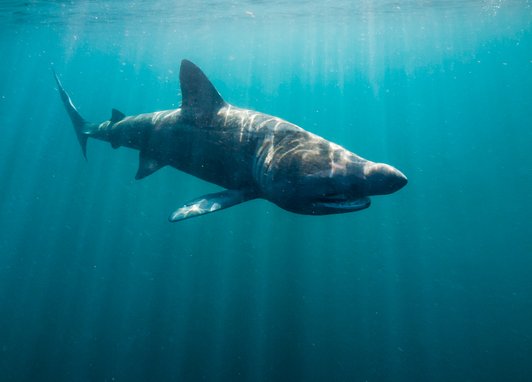
Little is currently known about basking sharks and what influences their movements, so shark scientist Gemma Scotts and fisheries officer Tom Morgan set up the Manx Shark Foundation to research if something is causing them to come to the Isle of Man. 

The foundation has partnered with other organisations to conduct research, including underwater camera surveys, drone monitoring and analysis of egg cases and species sightings. 

Tom said, "We hope to build on the island's long history of shark research by raising awareness, supporting further scientific studies and helping protect sharks, skates and rays in Manx waters for the future." 

Read more on the UK Pulse website
A basking shark swims through bright blue water in the Isle of Mann. Despite the basking shark often being seen with their mouths open, this ones mouth is partially closed. It has characteristic grey mottled colouring.

Image credit: Mark Harris

First baby puffin seen off Dorset in 30 years 

Following months of monitoring, and years of hoping, a puffling has been spotted on the Purbeck coast for the first time in three decades.
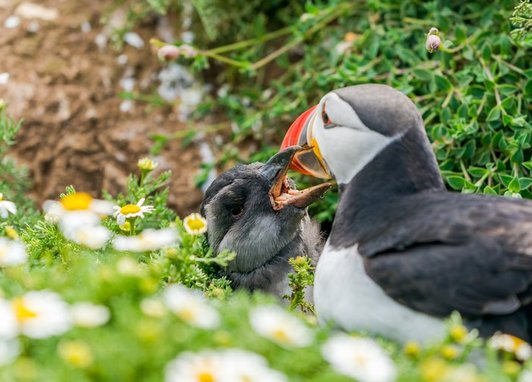
There were around 80 puffins nesting on this stretch of coast in the 1950s, but the population has steadily declined, leading to fears of the colony’s extinction. This summer brought some good news, however. Six adult puffins were recording bringing food to two nesting locations from April, with the puffling finally observed in July. 

Marine ornithologist Richard Caldow is one of the many welcoming the sight. He said, “tells us that Purbeck puffins can still lay fertile eggs, hatch them and, at least in some years, find enough food to rear a chick and escape the attention of predators.” 

The puffling has since fledged and will hopefully, in time, have pufflings of its own. 

Read more on the Guardian website

Image credit: Shutterstock / BBA Photography
Marine Conservation Society

28 Jul 2026