
Positive ocean news: May ’26 edition
3 minute read
Discover the latest news in this month’s ocean-positive round-up.
Nationwide clean-up sees marine litter stopped at source
People across the UK have been taking part in inland litter picks as part of the Marine Conservation Society’s Source to Sea Litter Survey, to prevent litter from ending up in our seas.
Running from the 16th-31st of May, the citizen science activity involves removing and recording litter from inland areas, such as parks, streets or rivers. The litter surveys completed by volunteers is used to track marine litter back to source and to campaign for legislation that prevents this type of pollution.

Two volunteers taking part in a Source to Sea survey along the River Thames
Image credit: Billy Barraclough
Marine life triples following bottom-trawling ban
Since the designation of the South Arran Marine Protected Area and the banning of bottom trawling within the majority of it a decade ago, marine life has flourished, a study has found.
A recent survey reported three times more seabed organisms and twice as many species within the protected areas, compared to nearby unprotected waters. The findings highlight the impact of bans on damaging fishing practices, and how the marine ecosystem can bounce back if given the chance.
Researchers found more than more than 1,500 organisms in around 100 litres of sediment, including spoon worms, bobbit worms and tower snails, which act as “gardeners of the seabed”, playing an important role in carbon cycling and rebuilding long-long ecosystems on the seabed.
Read more on the Mongabay website
Clean Water Bill announced in British King’s speech
On Wednesday 13th May, King Charles III set out the UK Government’s plans for the parliamentary year ahead, outlining 37 bills to be introduced. Among these bills was the Clean Water Bill, which will create a single, joined-up water regulator with the aim of tackling water pollution.
Also mentioned was the European Partnerships Bill, which has the potential to reduce the growing regulatory divergence between the EU and the UK on chemicals. Since the UK's departure from the European Union, the gap between EU and UK chemical regulation has grown, with the EU moving towards a blanket ban on PFAS regulation. Whilst the UK Government has taken positive steps with the release of the first-ever PFAS Plan to address chemical pollution, the UK's progress on chemicals regulation has been more incremental.
Read more in our LinkedIn post

Image credit: Sue Burton
20,000 native oysters prepared for deployment onto newly built reef
260 volunteers helped clean and check native oysters to be released in Chichester Harbour, as part of Solent Seascape, a major subtidal oyster reef restoration project.
During biosecurity days, volunteers scrubbed and washed the oysters to remove any invasive species or pathogens before they’re released.
Native oysters were once abundant in the Solent, but over the past century, overfishing, disease, invasive species and declining water quality have caused populations to decline by around 96%. Native oyster restoration projects such as Solent Seascape, Restoration Forth and the Dornoch Environmental Enhancement Project are helping to regenerate these habitats around the UK.
Dr Luke Helmer, from the Solent Seascape Project, said: “By restoring oyster reefs at this scale, we’re helping rebuild an ecosystem that supports biodiversity, improves water quality and benefits coastal communities.”
Read more on the Chichester Harbour Conservancy website
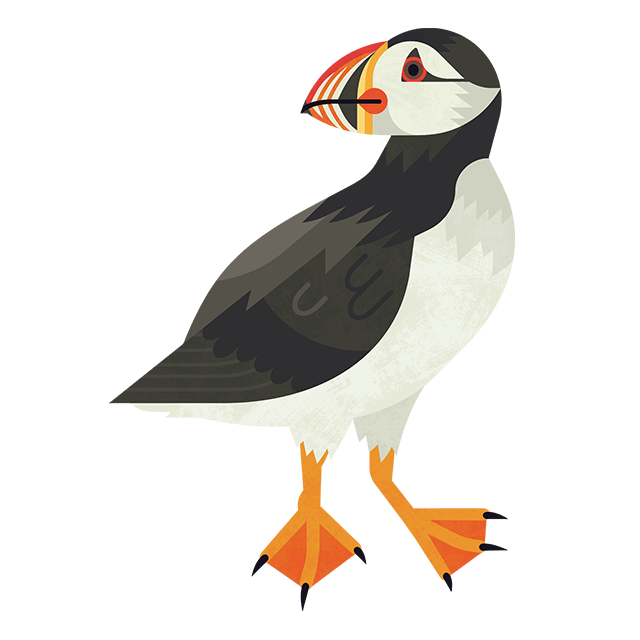
Record number of puffins on Skomer Island
52,019 puffins have been counted on Skomer Island, an internationally important breeding site for the seabirds – the highest number ever recorded.
The count was carried out by the Wildlife Trust of South and West Wales, which uses the same method as it did in the 1980s to allow for an accurate comparison in population numbers.
With puffins facing multiple threats to their food sources and habitats, this year’s population count, which is more than 8,000 higher compared to 2024, is welcome news – and the result of dedicated monitoring and conservation efforts.
Read more on the Oceanographic website

A group of puffins
Image credit: Kevin Morgans
Water meadow to become wildlife sanctuary
Hampshire and Isle of Wight Wildlife Trust have bought an eight-hectare site beside the River Meon, a rare chalk stream, to create a space for species to thrive.
The ecologically important site will be used to support wildlife such as water voles, which are facing habitat loss, whilst restoration work on the floodplain will help reduce flood risk and improve water quality.
The site will be closed to the public, enabling nature to flourish undisturbed.
Read more on the BBC News website