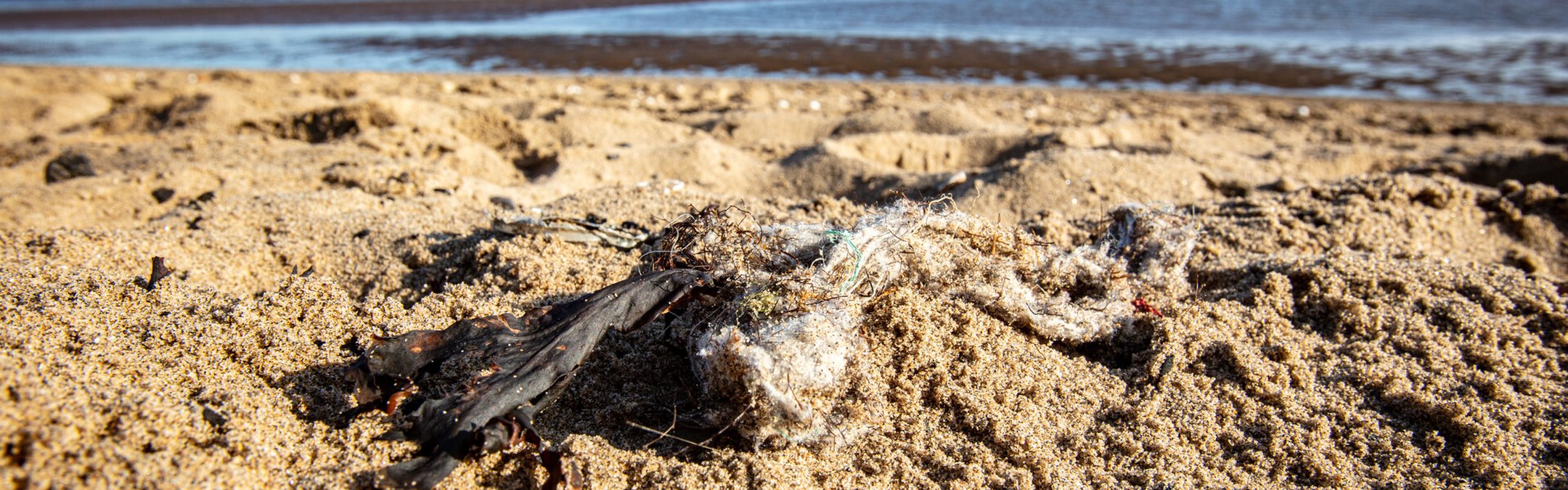
A clump of litter, including a disintegrating wet wipe, is found on a sandy beach in Crammond, Scotland.

Clean up our seas

From marine litter and chemicals to tiny microplastics, our ocean faces a growing threat from human activity.

    Getting started

    This action area is all about exploring the causes and consequences of ocean pollution and taking real-world action to reduce its impact.

    Whether it’s launching a school-wide plastic reduction campaign, investigating local water pollution or raising awareness through art and storytelling, your pupils will be inspired to think globally and act locally.

    Ocean Literacy Quiz

    The first step in your journey is for your pupils to individually complete our Ocean Literacy Quiz. The quiz is designed to give us a snapshot of your pupils' current ocean knowledge and is a great way to track how far they've come by the end of the award.

    Achieving your award

    To become an official Ocean-Friendly School, your group will need to complete the two required actions in each step and show us what you've achieved by submitting evidence.

    On this page, you’ll find everything you need: step-by-step activities, downloadable resources and creative ideas to bring ocean learning to life in your classroom.

    When you're ready to submit your evidence, simply use our online form. Don’t forget to include photos, videos, or documents that showcase your pupils’ amazing work!

    Got any questions? Get in touch at [email protected]

    Step 1: Explore
    Research the topic

    In this step, your pupils will start researching ocean pollution and find out why it's important.

    They’ll explore the big problems facing our seas, like microplastics, wet wipes and chemicals, and use our resources to help figure out how your school is connected to the ocean - no matter where you are.

    Pupils can record their research for this task on the Ocean Litter research sheet provided. The resources listed below can be used to support your learning - feel free to use as many or as few as you like.

    Don't forget to submit your evidence of your work!

    Ocean Litter Research Sheet
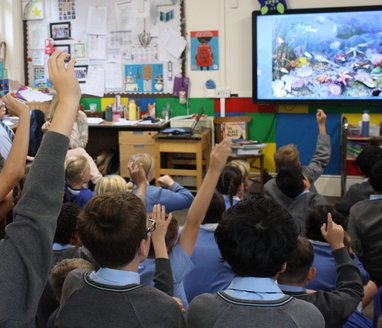
    A classroom of children sitting on the floor looking at a screen, some have their hands up

    A classroom of children taking part in our Ocean-Friendly Scools programme  |  Image credit: Park School, Bournemouth

    Actions to take

    Further learning
    Step 2: Evaluate

    Gather and analyse data

    Now it’s time to become ocean investigators!

    In this step, your pupils will carry out surveys and collect data to measure your school's impact on the ocean. These could be litter picks, uniform audits or shopping list surveys, and the data you gather will help you plan your next move.

    You'll also complete a scientific investigation to see the impact of your chosen ocean issue from your classroom.

    Don't forget to submit your evidence of your work!

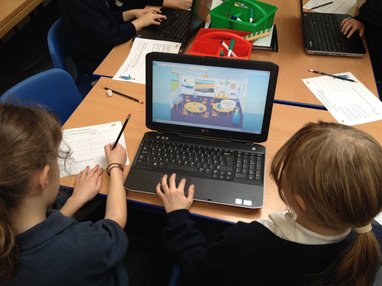
    The back of 2 primary school girls' heads looking at a laptop screen on a table. The laptop screen shows a cartoon sea captain standing iinside a classroom.

    Primary school students learning about the ocean on a laptop  |  Image credit: Jenny Griffiths

    Actions
    Step 3: Act

    Take action to improve the issue

    Now that you've learned about ocean pollution and gathered important data, it’s time to start making a difference.

    Using the data you collected in Step 2, your pupils will create a campaign or project that helps improve the problem.

    You could eliminate a single-use plastic item from your school, run a campaign around microfibres, or write to your local government representatives about your chosen topic - it's up to you! We've provide detailed planners below to help your team decide how to take action.

    Don't forget to submit your evidence of your work!

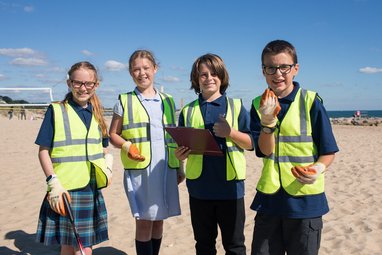
    4 school children looking at the camera wearing hi-vis jackets and gloves on. The girl on the far left is holding a litter picker and the boy that is centre right is holding a clipboard. They are on a beach

    Primary school students taking part in a beach clean  |  Image credit: Billy Barraclough

    Actions

    Step 4: Share

    Inspire others to be more ocean-friendly

    The final step is all about sharing what your group have learned and encouraging others to change.

    You could host a Big Blue Day, run a clothes swap or come up with your own fun way to celebrate! If you decide to fundraise for the sea, check out our guide for inspiration.

    To help your school continue their ocean-friendly journey, you'll also design an Ocean Manifesto with your very own pledges and inspire others to get involved.

    Don't forget to submit your evidence of your work!

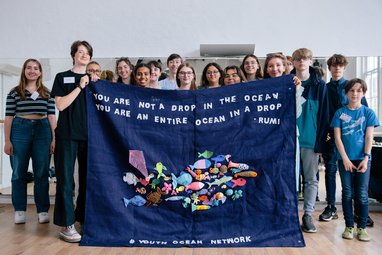
    A group of young adults holding up a big tapestry with fish on it. At the top it reads "You are not a dop in the ocean you are an entire ocean in a drop - Rumi". At the bottom it reads "#Youth Ocean Network"

    Youth ocean network world ocean day artwork  |  Image credit: Sudheha Amerasinghe

    Actions

    Further actions


    Check out more free teaching resources