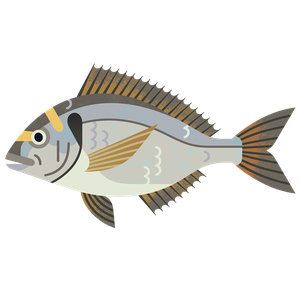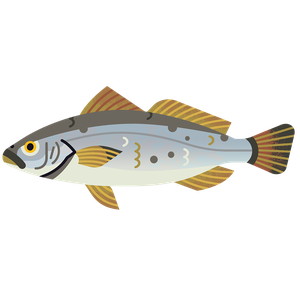

Seabass
Dicentrarchus labrax
What to check for
Location
Location
Location refers to two things:
- Where the fish population or stock lives, e.g., North Sea, or South Pacific.
- Who is managing the fishery. If it says “All areas”, this means that our scoring for management covers the same area as the fish stock.
West of Scotland, West of Ireland, eastern part of southwest of Ireland: All areas
Technical location
Technical location
A global system is used to split the ocean into different zones, areas, and subdivisions. Each zone is indicated by a number and/or letter. By law, this must be shown on all unprocessed seafood sold in the EU and UK, alongside the fishing method used to catch it. Look for these details on the packet to match your seafood to our ratings.
7j: Southwest of Ireland (East), 7b: West of Ireland, 6a: West of Scotland
Caught by
Caught by
Bottom trawl (otter)
Otter trawling involves towing a net over the seabed. The net is held open by two panels, known as otter boards. Fish are herded between the boards and into the net, which is then hauled onto the boat.
Hook & line (pole & line)
Pole & line, or baitboat, fishing involves a number of rods being set up on a boat. They might be operated by hand or mechanically. Bait is used to attract the target species. It’s also known as one-by-one fishing because the fish are landed onto the boat one at a time.
Net (demersal seine)
Demersal seining involves placing a net on the seabed and slowly closing it. As ropes move over the seabed to close the net, they herd fish into it. This method sometimes involves towing the net along the seabed. It is also known as flyshooting, Danish seining, and Scottish seining, depending on how it's set up.
Net (gill or fixed)
Gillnetting uses a net, suspended in the water, that is anchored to the seabed. It is kept vertical by buoys, to create a wall of netting that fish swim into and become entangled. The mesh size and length of time the nets are left at sea varies, depending on where they are fishing and what they are targeting.
Bottom trawl (otter), Hook & line (pole & line), Net (demersal seine), Net (gill or fixed)
Rating summary
There is concern regarding both stock biomass and fishing pressure on seabass in this region. Management of seabass in this area is considered ineffective due to ongoing concerns over both stock biomass and fishing pressure. As seabass is not managed through a formal TAC, total commercial and recreational removals are likely to exceed scientific advice. There are also concerns regarding bycatch controls in some fisheries, particularly those using gillnets and trawls. As a result, MCS is considered adequate overall, although some gaps remain that could be addressed to improve compliance and ensure management measures are fully effective. Seabass is caught using a variety of fishing gears, including hook-and-line, gillnet, trawl, and seine gears, some of which are associated with elevated levels of benthic impacts, and bycatch of non-target species, including ETP species. While current levels of seabass removals are unlikely to have a significant effect on food-web dynamics, some fishing gears may exert additional pressure on ecosystems that have already been altered by historical fishing activity and climate-driven environmental change.
Rating last updated August 2026
How we worked out this Rating
Please note this rating uses our new methodology.
Stock status
The size and health of a fish population, or 'stock', that is being targeted by fishermen is a crucial indicator of whether a fishery is sustainable. If the stock is too small to withstand fishing, it is at risk of crashing. We look at how big the stock is, and how much pressure there is from fishing, to assess this. The target level that many fisheries aim for is 'Maximum Sustainable Yield' - the most fish that can be caught year after year whilst keeping the population at a healthy size.
Stock Status Score: 1
There is concern for both the fishing pressure and biomass of seabass in this area.
Stock assessments are carried out by the International Council for Exploration of the Sea (ICES). This rating is based on the assessment published in 2026. Route 2 scoring has been applied to this rating owing to the lack of reference points for fishing pressure and biomass. Seabass has a low resilience to fishing pressure.
The stock identity of seabass in this region remains unknown. Combined with its life-history characteristics, including slow growth, late maturity, spawning aggregations, and strong site fidelity, this increases the species' vulnerability to overexploitation and localised depletion. In the absence of robust stock assessment information, there is concern regarding the status of the biomass.
Total catches cannot be quantified because recreational removals are unknown. A moratorium on commercial seabass fishing has been in place in Irish waters since 1990. Between 2012 and 2022, commercial landings remained below 2 tonnes annually, but subsequently increased sharply to over 5 tonnes in 2023 and more than 6 tonnes in 2024. Most recently, landings exceeded 2 tonnes in 2025.
For stocks lacking information on abundance or exploitation rates, ICES advises that a precautionary reduction in catches should be implemented unless ancillary information clearly indicates that current exploitation levels are sustainable. This approach has again been applied for 2027 onwards, with commercial landings advised not to exceed 1.6 tonnes in 2027, 2028, and 2029. Therefore, there is concern regarding fishing pressure. The 20% reduction in advice reflects the application of the precautionary buffer and subsequent rounding.
Management
Good management is vital to be sure that fishing doesn't cause fish populations to decline. We look at whether regulations follow the best available scientific advice, how well compliance is monitored and enforced, and whether this is effective in maintaining healthy fish stocks.
Management of the Target Stock Score: 0.75
Alignment with Scientific Advice Score: 1
Monitoring, Control and Surveillance Score: 0.5
Management of seabass in this area is considered ineffective due to ongoing concerns over both stock biomass and fishing pressure. As seabass is not managed through a formal TAC, total commercial and recreational removals are likely to exceed scientific advice. There are also concerns regarding bycatch controls in some fisheries, particularly those using gillnets and trawls. As a result, MCS is considered adequate overall, although some gaps remain that could be addressed to improve compliance and ensure management measures are fully effective.
There is currently no precautionary management plan in place for seabass in this area. Instead, UK seabass management seeks to balance fishing opportunities with conservation objectives while reflecting agreements between the UK and EU. Unlike many commercially important fish species, seabass is not managed through a Total Allowable Catch (TAC) system and is therefore not subject to the landing obligation. Management relies instead on a combination of licensing requirements, gear restrictions, catch limits, and seasonal closures.
For 2026, commercial fishers must hold an authorisation to catch, retain, tranship, or land seabass. Targeted fishing is permitted only for hook-and-line vessels. Fixed gillnets, demersal trawls, and seines may retain seabass as bycatch under specified conditions and catch limits, while fish caught using unauthorised gears, including pelagic trawls, ring nets, and drift nets, must be discarded.
UK management measures include:
- A Minimum Conservation Reference Size (MCRS) of 42 cm.
- A seasonal closure from 1 February to 31 March, intended to protect bass during the main spawning period.
- Annual catch limits of:
- 8 tonnes for hook-and-line vessels.
- 5.4 tonnes of bycatch for fixed-net vessels.
- 10 tonnes of unavoidable bycatch for demersal trawls and seines, with bass comprising no more than 20% of the total catch weight per trip.
- A requirement to immediately return all bass caught during the February to March closure period.
- Recreational 3-bag limit per fisher.
- Spatial and effort controls implemented by IFCAs and the Welsh Government, including closed areas and restrictions on shore-based nets.
Irish Management Measures include:
- A moratorium on commercial fishing for seabass in Irish territorial waters in subareas 6 and 7 (in place since 1990).
- A Minimum Conservation Reference Size (MCRS) of 42 cm.
- A seasonal closure from 1 February to 31 March, intended to protect bass during the main spawning period.
- A requirement to immediately return all bass caught during the February to March closure period.
- Recreational 2-bag limit per fisher.
Although the closed season aims to protect spawning aggregations, there is growing evidence that the timing of seabass spawning has shifted, likely in response to changing environmental conditions. This raises questions about whether the current February to March closure still provides optimal protection, or whether a different timing may be more effective for protecting spawning aggregations.
There are also concerns about how effectively some of the current bycatch provisions operate in practice. For fixed-net fisheries, there is potential for bass to be effectively targeted while being recorded as bycatch. For demersal trawls and seines, the requirement that bass must not exceed 20% of the catch by weight could create an incentive to retain additional catches of other species in order to remain within the permitted proportion. This has the potential to increase catches of non-TAC species, including species of conservation concern.
Further improvements in data collection would strengthen seabass management. Recreational removals remain poorly quantified, and there is uncertainty around discard levels. Better monitoring of both commercial and recreational fisheries, alongside improvements in gear selectivity, alongside spatial and temporal management, would help reduce catches of undersized fish. Continued illegal targeting of seabass also remains a risk to stock recovery and should continue to be a priority for enforcement.
Monitoring, control and surveillance of UK fisheries are delivered through licensing, vessel tracking, statutory reporting, observer coverage, inspections and other monitoring systems. All commercial fishing vessels must hold a valid UK fishing licence to operate in UK waters, although exemptions may apply to some unpowered vessels under 10 metres. Depending on the area, target species and activity, additional permits or authorisations may also be required.
Vessel tracking requirements vary by vessel size, area and administration through Vessel Monitoring Systems (VMS) and, where applicable, inshore VMS (iVMS).
- Vessels 12 m and over must report their position every two hours via VMS.
- Vessels under 12 m report their position continuously where iVMS applies, or may operate full VMS where required by licence conditions or when fishing offshore.
Reporting of fishing activity, catches, landings, discards and port movements is mandatory, with logbooks supporting traceability:
- Vessels 12 m and over submit electronic logbooks under Council Regulation 1224/2009.
- Vessels 10–12 m (and under 10 m Producer Organisation vessels) use paper logbooks, updated daily and submitted within 48 hours of landing.
- Non-PO vessels under 10 m are generally exempt unless required by licence conditions.
UK vessels must also carry fishery observers when directed, providing independent verification of activity and catch. Remote Electronic Monitoring (REM), using cameras, sensors and positional data, is being increasingly deployed to improve data quality and support enforcement. Its rollout is supported by the Fisheries Act 2020 and the Joint Fisheries Statement.
Together, these measures help prevent illegal, unreported and unregulated (IUU) fishing through vessel licensing, catch documentation, positional monitoring, statutory reporting and compliance checks. Enforcement action may include financial penalties, prosecution, licence suspension or other sanctions. The UK has committed to reducing IUU fishing and maintains a blacklist of vessels involved in such activities. This rating reflects full compliance with UK monitoring, control and surveillance requirements.
Similar monitoring, control and surveillance requirements apply to EU vessels under the EU Fisheries Control Regulation, including vessel tracking, electronic catch reporting, landing declarations, inspections and traceability requirements. The revised Regulation entered into force in January 2024 and introduces a phased requirement for REM with onboard cameras on EU vessels over 18 m identified as high risk for Landing Obligation non-compliance, alongside wider increases in digital reporting and traceability. Implementation and enforcement are undertaken by individual Member States, so observer coverage, inspection activity, enforcement effort and REM deployment can vary between countries and fisheries.
The Marine Conservation Society views Remote Electronic Monitoring (REM) with cameras as one of the most cost-effective tools for providing reliable fisheries data and aiding informed management decisions. Fully monitored fisheries enhance collaboration, data accuracy, stock recovery, and reduce impacts on marine wildlife and habitats. However, the full potential of REM may only be achieved when it tracks fishing location and documents catch and bycatch, particularly where vulnerable species and habitats are at risk.
The Fisheries Act (2020) requires the development of Fisheries Management Plans (FMPs) (replacing EU Multi-Annual Plans) in the UK. 43 FMPs have been proposed and are at various stages of development and implementation, these should all be published by the end of 2028. FMPs have the potential to be very important tools for managing UK fisheries, although data limitations may delay them for some stocks. It is also essential the UK governments define and adopt a standardised approach or model across the four nations to a universally defined FMP design, to ensure the consistence, quality and coherence of all the proposal FMPs.
The Marine Conservation Society is keen to see publicly available Fishery Management Plans for all commercially exploited stocks, especially where stocks are depleted, that include:
- An overview of the fishery including current stock status, spatial coverage, current fishing methods and impacts
- Targets for fishing pressure and biomass, and additional management when those targets are not being met, based on the best scientific evidence
- Timeframes for stock recovery
- Improved data collection, transparency, and accountability, supported by technologies such as Remote Electronic Monitoring (REM)
- Consideration of wider environmental impacts of the fishery, including habitat impacts and minimising bycatch
- Stakeholder engagement
A Bass FMP has been proposed, coordinated by Defra and the Welsh Government that incorporates this stock. At the time of writing, it is too soon to know whether proposed management measures will be effective in managing the stock. For more information about this FMP and expected progress and timelines, see [https://www.gov.uk/government/collections/fisheries-management-plans#published-fmps].
Capture method
Environmental impacts of fishing vary hugely, depending on the method used and where it's happening. We look at whether the fishing gear being used could have an effect on seabed habitats, and if so, how severe might this be. We also review whether it catches any other species by accident (bycatch), and what effect this might have on those species - especially if they're Endangered, Threatened, or Protected.
Capture Method Score: 0.5
Habitat Impacts: 0.5
Bycatch Impacts: 0.5
Vulnerable and ETP Species: 0.5
Ecosystems and Trophic Webs: 0.25
Seabass is caught using a variety of fishing gears, including hook-and-line, gillnet, trawl, and seine gears, some of which are associated with elevated levels of benthic impacts, and bycatch of non-target species, including ETP species. While current levels of seabass removals are unlikely to have a significant effect on food-web dynamics, some fishing gears may exert additional pressure on ecosystems that have already been altered by historical fishing activity and climate-driven environmental change.
Seabass in this area are caught by both commercial and recreational fisheries. Recreational fisheries, which predominantly use hook-and-line methods, are expected to account for a substantial proportion of total removals, whereas commercial landings are generally low. This reflects the commercial moratorium in place and the associated management measures, which restrict targeted commercial fishing to authorised hook-and-line vessels. Catches taken by trawls, nets, and seines may only be retained as bycatch.
Commercial and recreational hook-and-line fisheries directly target seabass and are among the most selective fishing methods used in UK waters. These gears do not contact the seabed, resulting in negligible habitat impacts, and generate very low levels of bycatch, including of endangered, threatened, and protected (ETP) species. However, uncertainty remains regarding the scale of recreational removals and the cumulative demand for bait species used by some anglers.
Seabass caught by otter trawls are taken as bycatch rather than through targeted fishing. As a bottom-towed gear, otter trawling can disturb seabed habitats through abrasion and penetration of the seabed and may result in bycatch of non-target and ETP species, including common skate and cetaceans.
Demersal seines also catch seabass incidentally. Compared with otter trawls, these gears have lighter seabed contact and generally lower bycatch rates, resulting in relatively minor habitat impacts. There is currently little evidence of significant interactions with ETP species, although monitoring coverage remains limited.
Gillnet fisheries retain seabass as bycatch and have minimal direct impacts on benthic habitats. However, they are associated with relatively high levels of bycatch of non-target and ETP species, particularly harbour porpoises, for which bycatch remains a significant conservation concern in some areas. Seabirds, seals, and elasmobranchs may also be affected.
Seabass are mesopredators that feed on a range of fish and invertebrate species. While current levels of seabass exploitation in the region are unlikely to have a significant direct effect on ecosystem function across the assessment area, the Celtic Seas ecosystem has already been substantially altered by historical fishing pressure and, more recently, climate change. The depletion of many commercial fish stocks and large elasmobranchs, alongside climate-driven shifts in species distributions, food-web dynamics, and ecosystem productivity, has reduced the resilience of the wider ecosystem. Consequently, indirect impacts associated with seabass fisheries, particularly seabed disturbance from bottom-towed gears and bycatch of ETP species in trawl and gillnet fisheries, may place additional pressure on ecosystems that are already under stress.
References
Almeida, A., Alonso, H., Oliveira, N., Silva, E., and Andrade, J. 2023. Using a visual deterrent to reduce seabird interactions with gillnets. Biological Conservation, 285: 110236. https://doi.org/10.1016/j.biocon.2023.110236
Angling Ireland, 2026. Bass fishing in Ireland. Available at: Bass fishing in Ireland | Fishing in Ireland - Catch the unexpected [Accessed on 24.08.2026]
Calderan, S. and Leaper, R., 2019. Review of harbour porpoise bycatch in UK waters and recommendations for management. January 2019, WWF. Available at https://www.wwf.org.uk/sites/default/files/2019-04/Review_of_harbour_porpoise_in_UK_waters_2019.pdf [Accessed on 21.08.2026]
Eigaard, O. R., Bastardie, F., Breen, M., Dinesen, G. E., Hintzen, N. T., Laffargue, P., Mortensen, L. O., Nielsen, J. R., Nilsson, H. C., O- Neill, F. G., Polet, H., Reid, D. G., Sala, A., Skold, M., Smith, C., Sorensen, T. K., Tully, O., Zengin, M. and Rijnsdorp, A. D., 2016. Estimating seabed pressure from demersal trawls, seines, and dredges based on gear design and dimensions. ICES Journal of Marine Science, 73:1, pp. i27- i43. https://doi.org/10.1093/icesjms/fsv099.
Froese, R., Pauly, D. 2026. FishBase. European Seabass, Dicentrarchus labrax. Available at: Dicentrarchus labrax, European seabass : fisheries, aquaculture, gamefish [Accessed on 21.08.2026]
Glemarec, G., Kindt-Larse, L., Scherffenberg Lundgaard, L. and Larsen, F. 2020. Assessing seabird bycatch in gillnet fisheries using electronic monitoring. Biological Conservation. 243. 108461. Available at https://doi.org/10.1016/j.biocon.2020.108461 [Accessed on 21.08.2026]
GOV.UK. 2026. Bass Fishing Guidance 2026. Available at: https://www.gov.uk/government/publications/bass-industry-guidance-2025/bass-fishing-guidance-2025 [Accessed on 21.08.2026]
Hiddink, J., Jennings, S., Sciberras, M., Szostek, C.L., Hughes, K.M., Ellis, N., Rijnsdorp, A.D., McConnaughey, R.A., Mazor, T., Hilborn, R., Collie, J.S., Pitcher, C.R., Amoroso, R.O., Parma, A.M., Suuronen, P. and Kaiser, M.J. 2017. Global analysis of depletion and recovery of seabed biota after bottom trawling disturbance. PNAS. 114:31, pp. 8301-8306. https://doi.org/10.1073/pnas.1618858114.
ICES. 2026. Sea bass (Dicentrarchus labrax) in divisions 6.a, 7.b, and 7.j (West of Scotland, West of Ireland, eastern part of southwest of Ireland). In Report of the ICES Advisory Committee, 2026. ICES Advice 2026, bss.27.6a7bj. https://doi.org/10.17895/ices.advice.30931976
ICES. 2025. Benchmark on selected sea bass stocks (WKBSEABASS). ICES Scientific Reports. 7:3. 520 pp. https://doi.org/10.17895/ices.pub.25002488
ICES. 2024. Celtic Seas Ecoregion – Ecosystem overview. In Report of the ICES Advisory Committee, 2024. ICES Advice 2024, Section 7.1, https://doi.org/10.17895/ices.advice.25713033
ICES. 2024. Bycatch of endangered, threatened and protected species of marine mammals, seabirds and marine turtles, and selected fish species of bycatch relevance. In Report of the ICES Advisory Committee, 2024. ICES Advice 2024, byc.eu. https://doi.org/10.17895/ices.advice.27999401 [Accessed on 21.08.2026]
Kennelly, S. J. & Broadhurst, M. K., 2021. A review of bycatch reduction in demersal fish trawls. Rev Fish Biol Fisheries 31, 289–318. https://doi.org/10.1007/s11160-021-09644-0.
Kynoch, R., Fryer, R. & Neat, F., 2015. A simple technical measure to reduce bycatch and discard of skates and sharks in mixed-species bottom-trawl fisheries. ICES J Mar Sci,72(6):1861.
Leaper, R. 2021. An evaluation of cetacean bycatch in UK fisheries: problems and solutions. Available at https://uk.whales.org/wp-content/uploads/sites/6/2021/02/cetacean-bycatch-uk-fisheries-problems-solutions.pdf [Accessed on 21.08.2026]
OSPAR, 2017. Intermediate Assessment 2017: Harbour Porpoise Bycatch. Available at https://oap.ospar.org/en/ospar-assessments/intermediate-assessment-2017/biodiversity-status/marine-mammals/harbour-porpoise-bycatch/ [Accessed on 21.08.2026]
Peltier, H., Authier, M., Deaville, R., Dabin, W., Jepson, P. D., van Canneyt, O., Daniel, P., and Ridoux, V., 2016. Small cetacean bycatch as estimated from stranding schemes: The common dolphin case in the northeast Atlantic. Environmental Science & Policy, 63 : 7–18. https://doi.org/10.1016/j.envsci.2016.05.004
Silva, F., Ellis, J. & Catchpole, T., 2012. Species composition of skates (Rajidae) in commercial fisheries around the British Isles and their discarding patterns. J Fish Biol., 80:1678–1703
van Denderen, P. Bolam, S., Hiddink, J.G., Jennings, S., Kenny, A., Rijnsdorp, A., and van Kooten, T., 2015. Similar effects of bottom trawling and natural disturbance on composition and function of benthic communities across habitats. Mar Ecol Prog Ser. 2015;541:31–43. https://doi.org/10.3354/meps11550.
Sustainable swaps
Learn more about how we calculate our sustainability ratings.
How our ratings work
Add impact to your inbox
Join the movement: get updates on the issues you care about.
We'll email you inspiring stories about the work we're doing to save and recover our oceans, and news about our urgent campaigns for positive change.