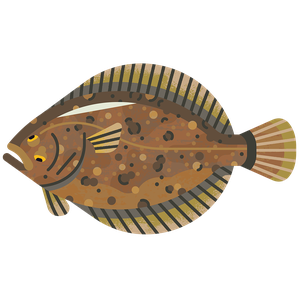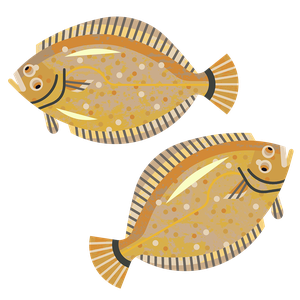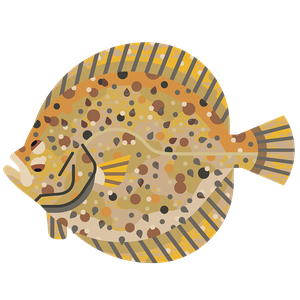

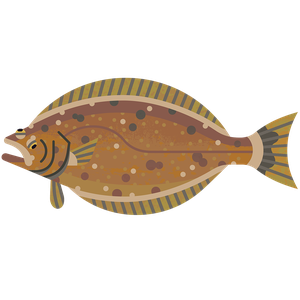
Dover sole
Solea solea
What to check for
Location
Location
Location refers to two things:
- Where the fish population or stock lives, e.g., North Sea, or South Pacific.
- Who is managing the fishery. If it says “All areas”, this means that our scoring for management covers the same area as the fish stock.
North Sea: All areas
Technical location
Technical location
A global system is used to split the ocean into different zones, areas, and subdivisions. Each zone is indicated by a number and/or letter. By law, this must be shown on all unprocessed seafood sold in the EU and UK, alongside the fishing method used to catch it. Look for these details on the packet to match your seafood to our ratings.
4: North Sea
Caught by
Caught by
Bottom trawl (beam)
Beam trawling involves towing a net over the seabed. The net is held open by a heavy beam. There can be tickler chains or chain matting, which drag along the front of the net. They disturb the fish, causing them to swim up and into the net, which is then hauled onto the boat.
Bottom trawl (beam)
Rating summary
Sole in the North Sea is fully fished, and the stock is harvested sustainably. Sole in the North Sea is well managed through a combination of the Landing Obligation, minimum conservation reference sizes, and technical measures. Although catches exceeded scientific advice once in the past five years, they remained below advised limits in the most recent year. The fishery has a well‑developed and effective Monitoring, Control, and Surveillance (MCS) system with reliable enforcement and low levels of IUU activity. Beam trawls have significant impacts on the seabed. There is bycatch of depleted North Sea cod and, although interactions between sole and cod are thought to be limited, they are not negligible. There is also bycatch of ETP species, including prohibited blue skate. Beam trawling may exert additional pressure on an ecosystem already affected by historic fishing and climate change.
Rating last updated July 2026
How we worked out this Rating
Please note this rating uses our new methodology.
Stock status
The size and health of a fish population, or 'stock', that is being targeted by fishermen is a crucial indicator of whether a fishery is sustainable. If the stock is too small to withstand fishing, it is at risk of crashing. We look at how big the stock is, and how much pressure there is from fishing, to assess this. The target level that many fisheries aim for is 'Maximum Sustainable Yield' - the most fish that can be caught year after year whilst keeping the population at a healthy size.
Stock Status Score: 0
Sole in the North Sea is fully fished and harvested sustainably.
Stock assessments are carried out by the International Council for Exploration of the Sea (ICES). This rating is based on the assessment published in 2026.
The stock assessment defines reference points for fishing pressure (F) and biomass (B). For fishing pressure, there is a target to keep F at or below Maximum Sustainable Yield (MSY). For biomass, there is no target. However, there is a trigger point (MSY Btrigger). Below this level, F should be reduced to allow the stock to increase. Because BMSY is not defined, the Good Fish Guide applies its own definition of 1.4 x MSY Btrigger.
Since high recruitment years in 1987 and 1991, the spawning stock biomass (SSB) has declined, falling from a peak of 169,000 tonnes in 1990. SSB has fluctuated around MSY Btrigger (50,849 tonnes) and Blim (36,593 tonnes) since the early 2000s. However, since 2019 SSB has shown an increasing trend, exceeding and remaining above MSY Btrigger from 2023 onwards. In 2026, SSB has fallen slightly to 61,225 tonnes, which is below the GFG BMSY proxy of 71,189 tonnes. Therefore, as this stock is above MSY Btrigger, but below the BMSY proxy, it is considered fully fished.
Fishing pressure (F) exceeded FMSY (0.22) from 1967 to 2020. However, it sharply declined from 2020 onward. In 2025, F was estimated at 0.052, which is below FMSY. Therefore, the stock is harvested sustainably.
ICES advises that when the MSY approach is applied, catches in 2027 should be no more than 24,638 tonnes. This is an increase of 98% from the previous year, which reflects an upward revision of stock abundance, particularly recent year classes, as well as revision of fishing mortality reference points.
Management
Good management is vital to be sure that fishing doesn't cause fish populations to decline. We look at whether regulations follow the best available scientific advice, how well compliance is monitored and enforced, and whether this is effective in maintaining healthy fish stocks.
Management of the Target Stock Score: 0
Alignment with Scientific Advice Score: 0.5
Monitoring, Control and Surveillance Score: 0.25
Sole in the North Sea is well managed through a combination of the Landing Obligation, minimum conservation reference sizes, and technical measures. Although catches exceeded scientific advice once in the past five years, they remained below advised limits in the most recent year. The fishery has a well‑developed and effective Monitoring, Control, and Surveillance (MCS) system with reliable enforcement and low levels of IUU activity.
The sole fishery in the North Sea is managed through Total Allowable Catches (TACs) and a range of technical measures. While the stock is covered by the EU Multiannual Plan (MAP), there is currently no joint management plan agreed between the EU and the UK.
Sole is primarily caught by beam trawlers operating in a mixed fishery with plaice in the southern North Sea. This fishery has undergone significant changes over the past decade, particularly following the introduction of pulse trawling, which proved highly effective for catching sole. Its subsequent ban has since altered fishing practices and patterns within the fishery.
Fishing mortality in the mixed sole and plaice fishery is also affected by technical management measures, including gear selectivity requirements, cod-end mesh size regulations and restrictions on beam length. The current UK technical measures for beam trawls are as follows:
- Beam Trawls:
- South of 55˚N: 80mm mesh cod-end, 180mm mesh headline panel.
- 55˚N to 56˚N: 100mm mesh cod-end, 180mm mesh headline panel.
- North of 56˚N: 120mm mesh cod-end, 180mm mesh headline panel.
For North Sea sole, a minimum landing size (MLS) of 24 cm is in place. However, evidence indicates that both age and size at first maturity have shifted significantly towards younger ages and smaller sizes since 1980. The size at which 50% of age-3 individuals are expected to mature has decreased from 29 cm to 25 cm. Although this suggests earlier maturation, the current MLS of 24 cm remains below the estimated size at maturity. As a result, there is still a risk of recruitment overexploitation, as individuals may be removed before reproducing, potentially undermining stock stability and reproductive output.
Additional protection is offered by the Plaice Box - a closed area established in 1989. It restricts vessels using towed gear with engine power over 300 horsepower and enforces a maximum aggregated beam length of 9m. This 9m limit is also in place within the UK’s 12 nautical mile zone. Although established to protect juvenile plaice, the closure could provide some indirect benefits for sole.
Sole in the North Sea has been subject to the Landing Obligation (LO) since 2016. The LO aims to improve catch reporting, reduce unwanted catches and encourage more selective fishing practices. However, survivability and de minimis exemptions apply in some North Sea sole/flatfish beam trawl fisheries, allowing certain catches, including some undersized sole, to be returned to the sea. In 2025, discards were estimated at 11.8% of total catches, and below minimum size (BMS) catches were estimated at less than 0.5% of the total catch.
Sole is managed under a TAC system. From 2020 to 2026, TACs have generally been set in line with, or below, catch advice. However, catches in 2024 were 118.5% of the recommended level, with advice set at 3,675 tonnes and catches reaching 4,355 tonnes. In the most recent year (2025) the TAC was set below advice, and catches filled only 42.3% of the TAC.
North Sea sole is within a mixed fishery for the area. ICES notes that, under current fishing patterns, it is not possible to simultaneously achieve all single stock catch advice within the North Sea demersal fishery, primarily due to the zero-catch advice on cod making it a choke species. Therefore, choke species are largely overlooked. However, interactions between sole and cod are considered limited, as fisheries targeting sole generally record low cod landings.
Monitoring, control and surveillance of UK fisheries are delivered through licensing, vessel tracking, statutory reporting, observer coverage, inspections and other monitoring systems. All commercial fishing vessels must hold a valid UK fishing licence to operate in UK waters, although exemptions may apply to some unpowered vessels under 10 metres. Depending on the area, target species and activity, additional permits or authorisations may also be required.
Vessel tracking requirements vary by vessel size, area and administration through Vessel Monitoring Systems (VMS) and, where applicable, inshore VMS (iVMS).
- Vessels 12 m and over must report their position every two hours via VMS.
- Vessels under 12 m report their position continuously where iVMS applies, or may operate full VMS where required by licence conditions or when fishing offshore.
Reporting of fishing activity, catches, landings, discards and port movements is mandatory, with logbooks supporting traceability:
- Vessels 12 m and over submit electronic logbooks under Council Regulation 1224/2009.
- Vessels 10–12 m (and under 10 m Producer Organisation vessels) use paper logbooks, updated daily and submitted within 48 hours of landing.
- Non-PO vessels under 10 m are generally exempt unless required by licence conditions.
UK vessels must also carry fishery observers when directed, providing independent verification of activity and catch. Remote Electronic Monitoring (REM), using cameras, sensors and positional data, is being increasingly deployed to improve data quality and support enforcement. Its rollout is supported by the Fisheries Act 2020 and the Joint Fisheries Statement.
Together, these measures help prevent illegal, unreported and unregulated (IUU) fishing through vessel licensing, catch documentation, positional monitoring, statutory reporting and compliance checks. Enforcement action may include financial penalties, prosecution, licence suspension or other sanctions. The UK has committed to reducing IUU fishing and maintains a blacklist of vessels involved in such activities. This rating reflects full compliance with UK monitoring, control and surveillance requirements.
Similar monitoring, control and surveillance requirements apply to EU vessels under the EU Fisheries Control Regulation, including vessel tracking, electronic catch reporting, landing declarations, inspections and traceability requirements. The revised Regulation entered into force in January 2024 and introduces a phased requirement for REM with onboard cameras on EU vessels over 18 m identified as high risk for Landing Obligation non-compliance, alongside wider increases in digital reporting and traceability. Implementation and enforcement are undertaken by individual Member States, so observer coverage, inspection activity, enforcement effort and REM deployment can vary between countries and fisheries.
The Marine Conservation Society views Remote Electronic Monitoring (REM) with cameras as one of the most cost-effective tools for providing reliable fisheries data and aiding informed management decisions. Fully monitored fisheries enhance collaboration, data accuracy, stock recovery, and reduce impacts on marine wildlife and habitats. However, the full potential of REM may only be achieved when it tracks fishing location and documents catch and bycatch, particularly where vulnerable species and habitats are at risk.
The Fisheries Act (2020) requires the development of Fisheries Management Plans (FMPs) (replacing EU Multi-Annual Plans) in the UK. 43 FMPs have been proposed and are at various stages of development and implementation, these should all be published by the end of 2028. FMPs have the potential to be very important tools for managing UK fisheries, although data limitations may delay them for some stocks. It is also essential the UK governments define and adopt a standardised approach or model across the four nations to a universally defined FMP design, to ensure the consistence, quality and coherence of all the proposal FMPs.
The Marine Conservation Society is keen to see publicly available Fishery Management Plans for all commercially exploited stocks, especially where stocks are depleted, that include:
- An overview of the fishery including current stock status, spatial coverage, current fishing methods and impacts
- Targets for fishing pressure and biomass, and additional management when those targets are not being met, based on the best scientific evidence
- Timeframes for stock recovery
- Improved data collection, transparency, and accountability, supported by technologies such as Remote Electronic Monitoring (REM)
- Consideration of wider environmental impacts of the fishery, including habitat impacts and minimising bycatch
- Stakeholder engagement
A Southern North Sea and Eastern Channel mixed flatfish FMP has been proposed, coordinated by Defra that incorporates this stock. At the time of writing, it is too soon to know whether proposed management measures will be effective in managing the stock. For more information about this FMP and expected progress and timelines, see [https://www.gov.uk/government/collections/fisheries-management-plans#published-fmps].
Capture method
Environmental impacts of fishing vary hugely, depending on the method used and where it's happening. We look at whether the fishing gear being used could have an effect on seabed habitats, and if so, how severe might this be. We also review whether it catches any other species by accident (bycatch), and what effect this might have on those species - especially if they're Endangered, Threatened, or Protected.
Capture Method Score: 0.75
Habitat Impacts: 0.75
Bycatch Impacts: 0.25
Vulnerable and ETP Species: 0.5
Ecosystems and Trophic Webs: 0.25
Beam trawls have significant impacts on the seabed, including damage to benthic communities and vulnerable marine habitats. Within this mixed demersal fishery, there is bycatch of depleted North Sea cod and, although interactions between sole and cod are thought to be limited, they are not negligible. There is also bycatch of ETP species, including prohibited blue skate, which could possibly be hindering recovery of the species. While declining fishing pressure and reduced sole catches have likely lessened some of the fishery's ecosystem impacts, beam trawling may contribute additional pressure to an ecosystem already altered by fishing and climate change.
The majority of North Sea sole landings come from beam trawls (94.4%), followed by gillnets and trammel nets (2.8%) and other bottom trawls (2.3%), with only 0.5% taken by other gears.
Beam trawling, particularly with chain-mat gear, can significantly impact benthic communities. Demersal trawls make direct contact with the seabed, causing penetration and abrasion of habitat features. The extent of seabed impact depends on gear type, sediment composition, and the area's natural resilience. For instance, regions that are used to tidal and wave disturbances are less sensitive, whereas areas untrawled areas may be more vulnerable. Beam trawls typically penetrate the seabed between 1cm and 8cm, with heavier gear causing greater disruption than otter trawls.
In the Greater North Sea ecoregion, impacts from bottom trawling are variable. Most fishing grounds consist of mud and sand, which are less susceptible to damage than habitats like reefs and seagrass beds. In 2022, it was estimated that 66% of the ecoregion shallower than 800m had been trawled, with 70% of this from depths of 0–200m and 27% from 200–800m. Areas with the highest fishing pressure include Skagerrak, Kattegat, and parts of the central North Sea.
There are several Marine Protected Areas (MPAs) within the North Sea that are designated to protect sensitive benthic habitats and species that may be vulnerable to bottom-towed fishing gears. Restrictions on bottom-towed gears are already in place at a few sites, including Dogger Bank, Farnes East, and North Norfolk Sandbanks and Saturn Reef. However, protection across the MPA network remains incomplete, with several sites only recently being considered through the MMO's Stage 3 byelaw process. As such, some designated features may remain exposed to disturbance from bottom trawling, potentially limiting habitat recovery and the achievement of conservation objectives. Given the critical role MPAs play in recovering marine health and supporting ecosystem function, the Marine Conservation Society urges supply chain actors to verify whether their sources originate from within MPAs. If so, businesses should confirm that fishing operations are legally conducted and request evidence from the fishery or managing authority to ensure activities do not harm protected features or compromise conservation objectives.
Beam trawls have the potential to take relatively high quantities of bycatch, including those of conservation concern. In the Greater North Sea ecoregion, bycatch from beam trawls can include marine mammals, seabirds, fish, elasmobranchs, and endangered, threatened and protected (ETP) species.
Bycatch data for UK and EU fisheries are often limited due to insufficient monitoring. However, some North Sea demersal trawl fisheries, which target flatfish species, are Marine Stewardship Council (MSC)-certified and record bycatch. This can provide an indication of the species likely to be encountered where certified and uncertified fleets overlap. Certified fleets have reported bycatch of North Sea cod, of which the southern substock is currently under zero-catch advice due to biomass being below safe biological limits. However, sole landings in the North Sea have declined substantially over the past decade, and cod catches by beam trawlers remain very low, accounting for around 1% of total cod landings. As a result, interactions between sole fisheries and cod are considered limited, with fisheries targeting sole generally recording low cod catches. Therefore, the direct contribution of the sole fishery to cod bycatch and any associated impacts on stock recovery are likely to be limited. Measures to reduce cod bycatch are also in place in parts of the Scottish North Sea, including the UK North Sea Cod Avoidance Plan, which incorporates larger mesh sizes, seasonal closures and move-on requirements.
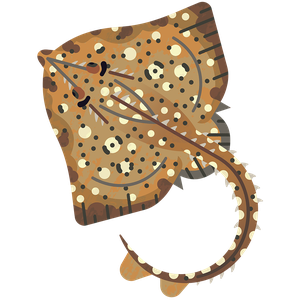
In terms of endangered, threatened and protected (ETP) species, the certified fleet reported a marked increase in blue skate and spurdog bycatch in 2024. However, the risks associated with these species differ. Blue skate, as part of the common skate complex, remains protected in UK and EU waters, with fishing, retention, transhipment and landing prohibited, and is managed under a zero-catch approach. The recent increase in blue skate bycatch suggests that the demersal fishery could possibly hinder the recovery of the species. By contrast, spurdog biomass has recovered above MSY Btrigger and current fishing mortality is considered sustainable, indicating that incidental catches in the North Sea demersal fishery are unlikely to be contributing to population decline.
Sole occupy a mid-trophic-level position in the North Sea food web, feeding primarily on benthic invertebrates while also serving as prey for marine mammals and larger predatory fish. The ecosystem has changed in recent decades due to both climate change and fishing pressure. Rising sea temperatures have altered trophic pathways through reductions in zooplankton abundance, while declines in key forage species such as sandeels have contributed to shifts in food-web structure and energy transfer.
Since the early 2000s, fishing pressure on sole has decreased, with landings declining from over 12,000 tonnes to fewer than 4,000 tonnes in the past decade. As fishing activity has reduced, the fishery's impact on broader ecosystem is also likely to have lessened. However, sole is commonly caught using trawls, with relatively high-impacts relating to benthic disturbance and multi-species bycatch. Much of the fishery operates in the southern North Sea, where seabed habitats are naturally exposed to high levels of physical disturbance and are therefore considered less sensitive to trawling impacts than those in the north-eastern North Sea. Nevertheless, habitat alteration and incidental catch associated with trawling may add further pressure to an already altered ecosystem.
References
Cook, R., Gaudian, G., des Clers, S. and Seip- Markensteijn, C.M., 2022. Marine Stewardship Council (MSC) Public Certification Report: Scottish Fisheries Sustainable Accreditation Group (SFSAG) Northern Demersal Stocks. Prepared by Control Union (UK) Limited on behalf of Scottish Fisheries Sustainable Accreditation Group (SFSAG). May 2022. Available at https://cert.msc.org/FileLoader/FileLinkDownload.asmx/GetFile?encryptedKey=BdxOJoY7Sf4DmNJEB/m47M6xx0rRfgP/niGx3vj5Ud8hadYI3XCNrnlSFL/jlTgK [Accessed on 08.07.2026].
Eigaard, O.R., Bastardie, F., Breen, M., Dinesen, G.E., Hintzen, N.T., Laffargue, P., Mortensen, L.O., Nielsen, J.R., Nilsson, H.C., O'Neill, F.G., Polet, H., Reid, D.G., Sala, A., SkOld, M., Smith, C., Sorensen, T.K., Tully, O., Zengin, M., Rijnsdorp, A.D., 2016. Estimating seabed pressure from demersal trawls, seines, and dredges based on gear design and dimensions. ICES Journal of Marine Science, Volume 73, Issue suppl 1. Pages i27-i43. Available at https://academic.oup.com/icesjms/article/73/suppl_1/i27/2573989 [Accessed on 08.07.2026].
Froese, R., Pauly, D. 2026. FishBase. Common sole, Solea solea. Available at: Solea solea, Common sole : fisheries, aquaculture, gamefish, aquarium [Accessed on 08.07.2026].
GOV.UK. 2025. Technical Conservation and Landing Obligation rules and regulations 2025. Available at: Technical Conservation and Landing Obligation rules and regulations 2025 - GOV.UK [Accessed on 08.07.2026].
GOV.UK. 2025. Marine protected areas Stage 3 Consultation. Available at: Marine protected areas Stage 3 Consultation - GOV.UK [Accessed on 08.07.2026].
Hiddink, J., Jennings, S., Sciberras, M., Szostek, C.L., Hughes, K.M., Ellis, N., Rijnsdorp, A.D., McConnaughey, R.A., Mazor, T., Hilborn, R., Collie, J.S., Pitcher, C.R., Amoroso, R.O., Parma, A.M., Suuronen, P. and Kaiser, M.J. 2017. Global analysis of depletion and recovery of seabed biota after bottom trawling disturbance. PNAS. 114:31, pp. 8301-8306. https://doi.org/10.1073/pnas.1618858114.
ICES. 2026. Sole (Solea solea) in Subarea 4 (North Sea). In Report of the ICES Advisory Committee, 2026. ICES Advice 2026, sol.27.4, https://doi.org/10.17895/ices.advice.30932402
ICES. 2026. Plaice (Pleuronectes platessa) in Subarea 4 (North Sea) and Subdivision 20 (Skagerrak). In Report of the ICES Advisory Committee, 2026. ICES Advice 2026, ple.27.420, https://doi.org/10.17895/ices.advice.30932264
ICES. 2026. Working Group on the Assessment of Demersal Stocks in the North Sea and Skagerrak (WGNSSK). ICES Scientific Reports. 08:43. 1183 pp. https://doi.org/10.17895/ices.pub.32676345
ICES. 2025. Greater North Sea ecoregion – fisheries overview In Report of the ICES Advisory Committee, 2025. ICES Advice 2025, section 9.2. https://doi.org/10.17895/ices.advice.30710897
ICES. 2025. Greater North Sea mixed fisheries considerations. In Report of the ICES Advisory Committee, 2025. ICES Advice 2025. https://doi.org/10.17895/ices.advice.30316027
ICES. 2025. Cod in Subarea 4, divisions 6.a and 7.d, and Subdivision 20 (North Sea, West of Scotland, eastern English Channel and Skagerrak). In Report of the ICES Advisory Committee, 2025. ICES Advice 2025, cod.27.46a7d20. https://doi.org/10.17895/ices.advice.27202566
ICES. 2024. Spurdog (Squalus acanthias) in Subareas 1-10, 12 and 14 (the Northeast Atlantic and adjacent waters). In Report of the ICES Advisory Committee, 2024. ICES Advice 2024, dgs.27.nea. https://doi.org/10.17895/ices.advice.25019237
ICES. 2024. Greater North Sea ecoregion – Ecosystem overview. In Report of the ICES Advisory Committee, 2024. ICES Advice 2024, Section 7.1, https://doi.org/10.17895/ices.advice.25714239
Kennelly, S. J. & Broadhurst, M. K., 2021. A review of bycatch reduction in demersal fish trawls. Rev Fish Biol Fisheries 31, 289–318. https://doi.org/10.1007/s11160-021-09644-0.
Kynoch, R., Fryer, R. & Neat, F., 2015. A simple technical measure to reduce bycatch and discard of skates and sharks in mixed-species bottom-trawl fisheries. ICES J Mar Sci,72(6):1861.
Lynam, C.P., Llope, M., Möllmann, C., Helaouët, P., Bayliss-Brown, G.A. and Stenseth, N.C., 2017. Interaction between top-down and bottom-up control in marine food webs. Proceedings of the National Academy of Sciences, 114(8), pp.1952-1957.
MMO (2025) UK National North Sea Cod Avoidance Plan. Available at: https://assets.publishing.service.gov.uk/media/678f8ffc1784b7a1338e9db0/UK_National_Cod_Avoidance_Plan.pdf [Accessed on 08.07.2026].
Mollet, F.M., Kraak, S.B. and Rijnsdorp, A.D., 2007. Fisheries-induced evolutionary changes in maturation reaction norms in North Sea sole Solea solea. Marine Ecology Progress Series, 351, pp.189-199.
Silva, F., Ellis, J. & Catchpole, T., 2012. Species composition of skates (Rajidae) in commercial fisheries around the British Isles and their discarding patterns. J Fish Biol., 80:1678–1703.
Thorpe, R.B., Arroyo, N.L., Safi, G., Niquil, N., Preciado, I., Heath, M., Pace, M.C. and Lynam, C.P., 2022. The response of North Sea ecosystem functional groups to warming and changes in fishing. Frontiers in Marine Science, 9, p.841909.
van Denderen, P. Bolam, S., Hiddink, J.G., Jennings, S., Kenny, A., Rijnsdorp, A., and van Kooten, T., 2015. Similar effects of bottom trawling and natural disturbance on composition and function of benthic communities across habitats. Mar Ecol Prog Ser. 2015;541:31–43.
Wilson, D., Cieri, M. 2026. Marine Stewardship Council (MSC) 3rd Surveillance Audit Report: Scottish Fisheries Sustainable Accreditation Group (SFSAG) Northern Demersal Stocks. Prepared by Control Union (UK) Limited on behalf of Scottish Fisheries Sustainable Accreditation Group (SFSAG). March 2026. Available at: Assessments SFSAG Northern Demersal Stocks - MSC Fisheries [Accessed on 08.07.2026].
Sustainable swaps
Learn more about how we calculate our sustainability ratings.
How our ratings work
Add impact to your inbox
Join the movement: get updates on the issues you care about.
We'll email you inspiring stories about the work we're doing to save and recover our oceans, and news about our urgent campaigns for positive change.