
Sea angel
Clade gymnosomata (Suborder)
IUCN Status:Not Evaluated
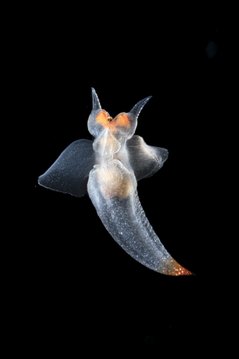
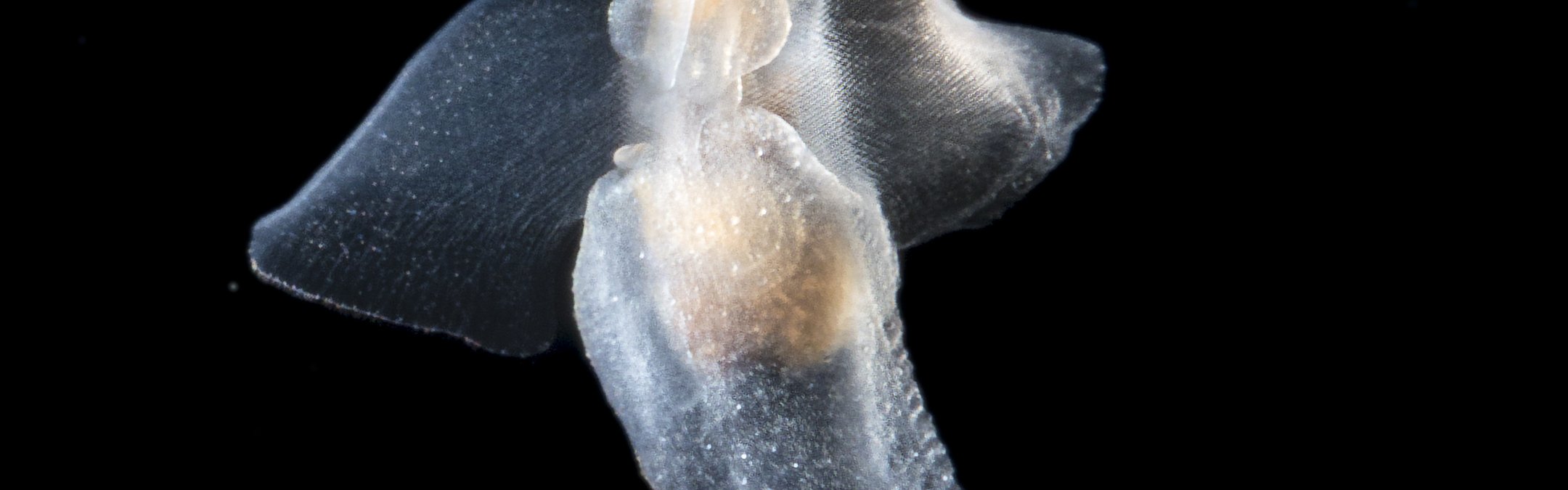
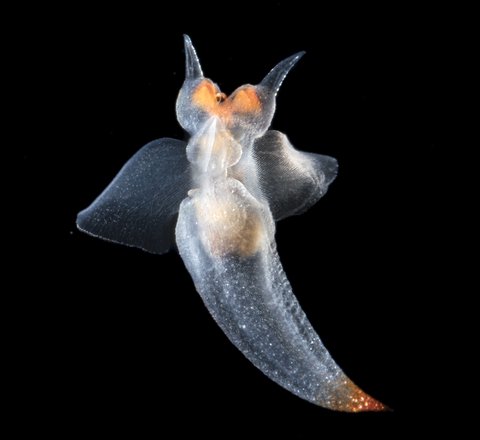
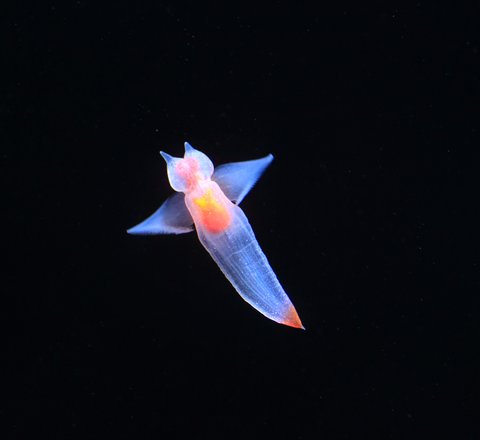
These tiny, semi-translucent swimming sea slugs get their name from their distinctive wings on the side of their body. Because of their semi-transparent bodies, it is possible to see their organs.
What do they look like?
They're semi-translucent with distinctive wings on the side of their body. They're also incredibly small at just 1-5cm long.
Where can they be found?
While they favour colder waters, they can be found across the UK.
Did you know... Sea angels are born with shells but undergo a metamorphisis as they grow, shedding their shell completely.
Key facts
Sea angels are proterandric hermaphrodites - they have both male and female sex organs. Their complex mating rituals can last as long as four hours.
Despite their tiny size, they can swim incredibly quickly thanks to their wings - "flying" through the water at almost double the speed of their prey. They eat other swimming sea snails by extending hidden tentacles with hooks from their body to capture their prey from its shell. Certain species of sea angels (such as Clione limacina) only eat sea butterflies.
| IUCN status | Not Evaluated |
|---|---|
| Length | They're incredibly small at just 1-5cm long. |
| Weight | Because they're so small and mostly made up of water, weights are estimated at a fraction of a gram. |
| Speed and distance | They travel at a grand old speed of 0.2mph. |
| Diet | They enjoy a diet of swimming snails and sea butterflies - another tiny, swimming snail with a shell. |
| Lifespan | For such a small species, they typically live for an impressive 1-2 years. |