
John Dory
Zeus faber
IUCN Status:Data Deficient
John Dory are an unmistakable UK fish as they look so different to anything else seen around our shores.
What do they look like?
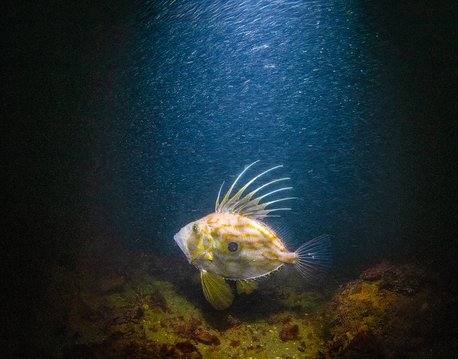
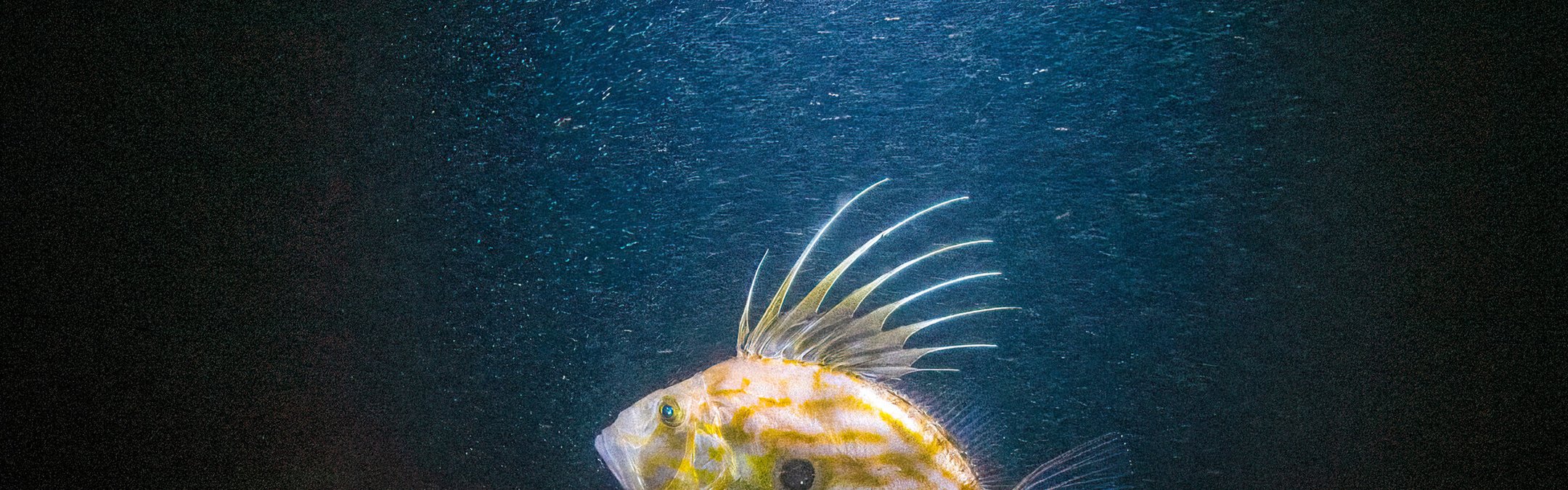
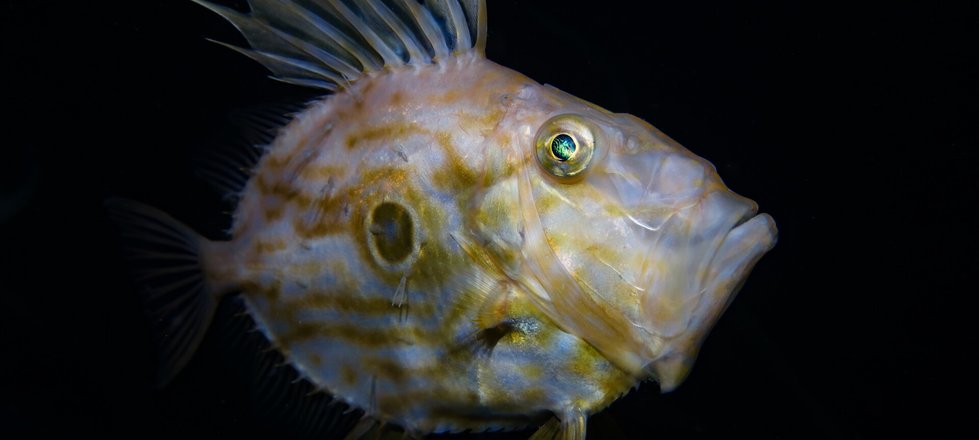
From the side, their olive yellow disc-shaped bodies and long dorsal spines stand out. They also have a bold, black spot on each flank. These are thought to help misdirect predators and momentarily startle prey by looking like its eyes. Face on, they transform completely, they become a tall, narrow apparition with a perpetually glum expression. But that mournful look hides a highly effective ambush hunter.
Where can they be found?
They're most abundant on the Atlantic coast.
Did you know... The bold black spots on the John Dory sides are known as St Peter’s thumbprints. It's named after the old tale in which the fisherman‑turned‑apostle reached into the sea, picked up the curious fish, and left those dark marks on its flanks.
Key facts
John Dory drift alone through coastal shallows and deeper reefs. Their extreme thinness lets them approach prey head on without being noticed. When the moment is right, they fire their jaws forward and hoover up unsuspecting fish with a lightning fast suction strike. This feeding method makes them one of the oddest predators to watch in action. Despite often appearing motionless, John Dory are surprisingly agile. They can pivot sideways, roll upside down, and make sharp, sudden manoeuvres as they chase down prey.
John Dory aren’t targeted commercially in fishing in the UK because they’re solitary, slow‑growing, and naturally scarce. They’re mostly caught as bycatch in fisheries and any that are caught are sold on to restaurants where they’re considered highly valuable.
They’re classed as a high‑vulnerability species, yet there’s no minimum landing size or catch limit in UK fisheries. This is not because they’re sustainable, but because they’re too uncommon to support a dedicated fishery. This means the few that are caught can be taken regardless of size, which adds to their conservation concern.
| IUCN status | Data Deficient |
|---|---|
| Length | Adult John Dory typically reach up to 45cm in length, but some have grown up to 60cm. UK John Dory seen along the coast tends to be a little longer than a standard ruler (30cm). |
| Weight | John Dory are actually quite heavy for how they look. They usually weigh up to 2kgs, but some found far from the shore have been recorded to weigh around 5kg, although this is uncommon in UK waters. |
| Speed and distance | They don’t move too fast to avoid being seen by their prey and will often appear to be drifting. However, their suction strike has been recorded to all happen in less than 20 milliseconds! They'll mainly stay within regional waters and do not travel long distances. They'll generally stay within the same region but may travel between shallow and deep waters, depending on the season. |
| Diet | Anything it thinks it could suck up with no problem. This usually includes small fish like sand eels and juvenile fish such as mackerel, as well as small squids, prawns and shrimps. They'll also eat crabs if they're small enough. |
| Lifespan | John Dory often live up to a decade old, but some have reached 12. However, they're slow growers and mature fairly late in life. Additionally, most of the species you might see while diving are young, as John Dory are vulnerable to fishing pressures. |