
Harlequin shrimp
Hymenocera picta
IUCN Status:Not Evaluated
Harlequin shrimp bring a splash of colour to coral reefs, where these tiny crustaceans spend their lives in devoted pairs and prove two "claws" are better than one!
What do they look like?
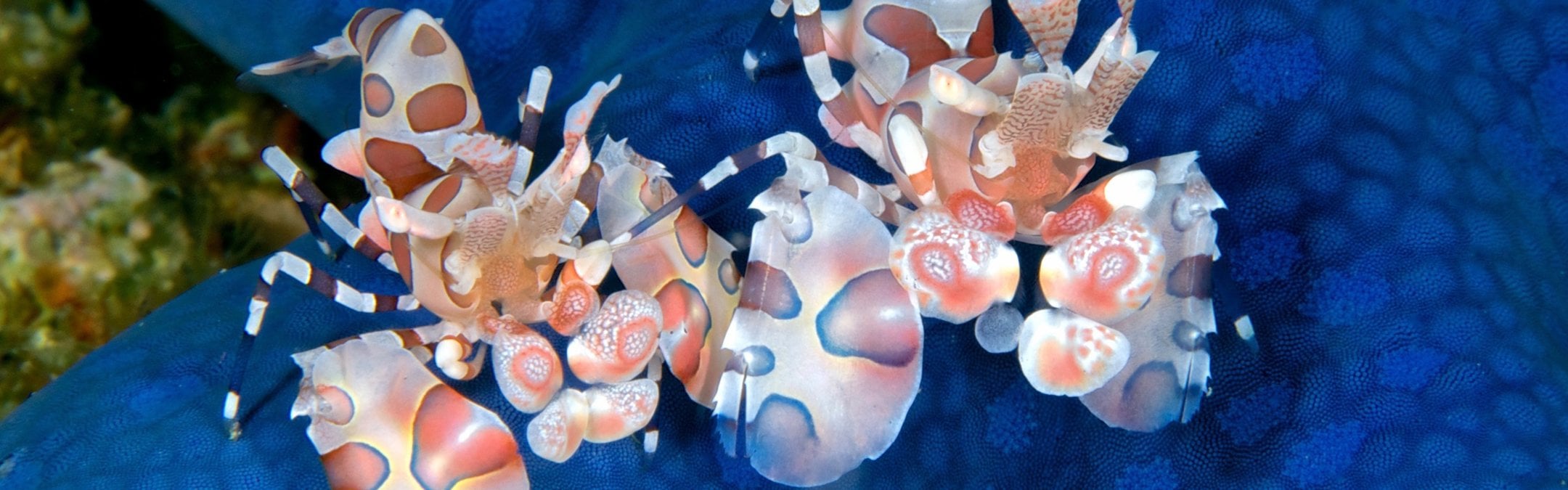
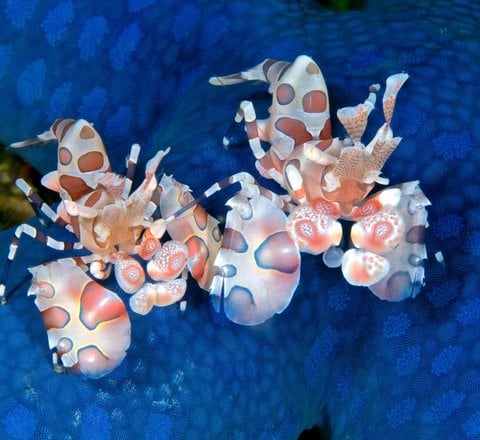
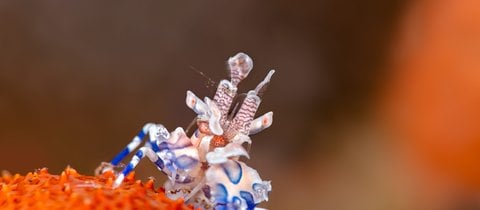
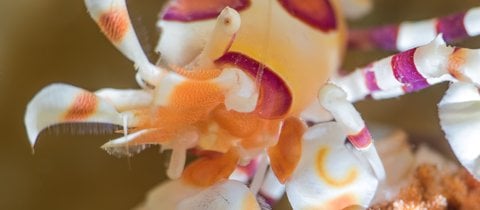
Harlequin shrimp have cream, blue, purple, pink, red, orange, and yellow markings covering their bodies. This gives them a distinctive pattern similar to their name's sake. They have flattened claws shaped like paddles, and they have broad, leaf-like legs that make them look similar to a praying mantis. Females are usually larger than males and have a broader abdomen to help them carry their eggs.
Where can they be found?
Tropical coral reefs throughout the Indo-Pacific region, including the Red Sea, eastern Africa, Southeast Asia, Australia and many Pacific islands.
Did you know... No two harlequin shrimp patterns are exactly alike. Their colourful patches can vary in shape, intensity and size, meaning every shrimp is unique.
Key facts
Don't let its bright colours fool you. The harlequin shrimp is a highly specialised reef predator with a rather gruesome dining strategy. Unlike most shrimp, it feeds almost exclusively on sea stars, including the infamous crown-of-thorns starfish, one of the most venomous starfish in the world. Rather than killing its prey outright, the harlequin shrimp keeps it alive for as long as possible, feeding slowly over days or even weeks. A single crown-of-thorns can provide enough food for a pair of shrimp for an extended period, with the shrimp carefully consuming the starfish's arms first. This keeps the starfish alive as long as possible. In some cases, the starfish might shed its arm to try to escape and use its other arms to flip itself back over.
Harlequin shrimp are often found in monogamous pairs and work together to tackle prey far larger than themselves. Couples have been observed flipping hefty starfish onto their backs before sharing the meal together. Talk about an unusual dinner date!
Their powerful, flattened claws are perfectly adapted for this lifestyle, allowing them to turn over starfish and access the softer underside while avoiding the animal's defensive spines. Despite their fearsome feeding habits, harlequin shrimp are completely harmless to humans. Their claws are designed for handling prey rather than defence, and their vivid colours act as a warning to predators that they are unpalatable or toxic, due to chemicals obtained from their starfish prey.
Although harlequin shrimp have functional eyes, they rely heavily on their large, petal-like antennules to detect chemical cues in the water and locate starfish prey, effectively "sniffing" out starfish from a distance and locating their next meal with remarkable precision.
Local populations in the wild are being affected by several factors including; being collected for the aquarium trade due to their striking appearance, their reliance on prey, climate change and declining coral reef health.
| Also known as | Clown shrimp, Painted shrimp |
|---|---|
| IUCN status | Not Evaluated |
| Diet | They primarily eat starfish, but they occasionally consume other echinoderms such as sea urchins too |
| Length | They are quite small at around 5cm, about the length of a typical house key. |
| Weight | Less than 10g - that's a little more than the weight of a £1 coin. |
| Habitat | Shallow waters, hiding beneath coral ledges, rocky crevices and reef overhangs, |
| Speed and distance | Harlequin shrimp are slow-moving and spend much of their time walking across the reef or remaining hidden in crevices. Once they find prey, they can remain in one place eating it for days, depending on the size of its meal. |
| Lifespan | They usually live between 2-3 years in the wild |
Support our blue planet
The ocean is home to an extraordinary diversity of life, but it faces growing threats from climate change, human activity, habitat destruction and pollution. Your support helps fund vital science-based conservation, research, and restoration projects that make a real difference.