

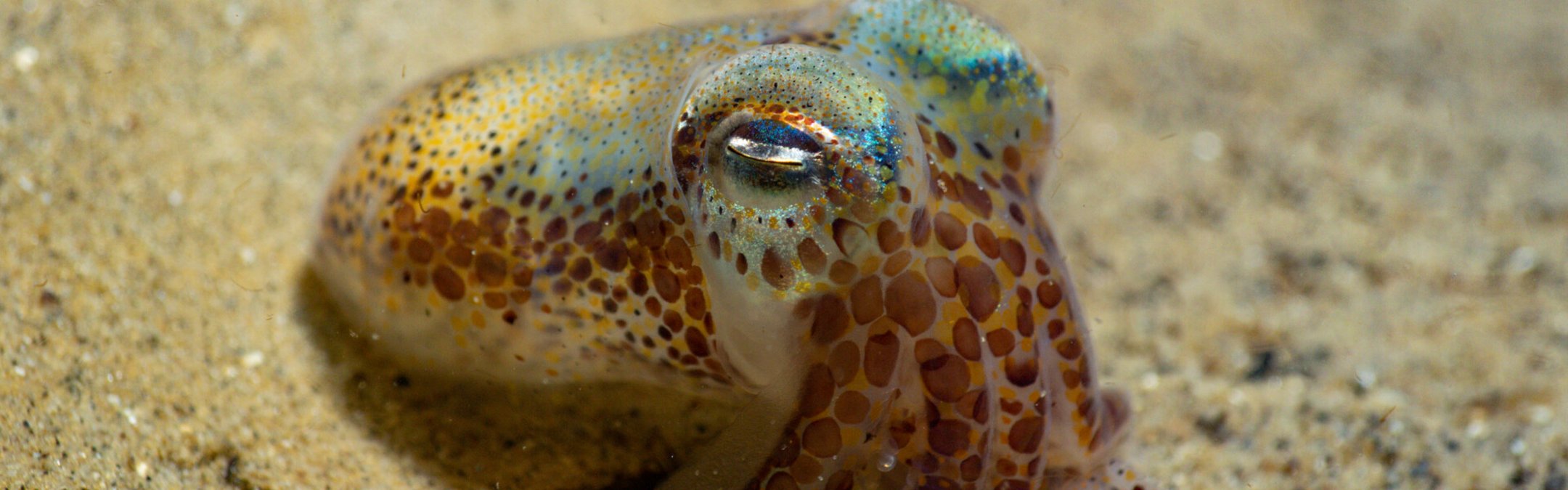
Atlantic bobtail squid
Sepiola atlantica
IUCN Status:Data Deficient
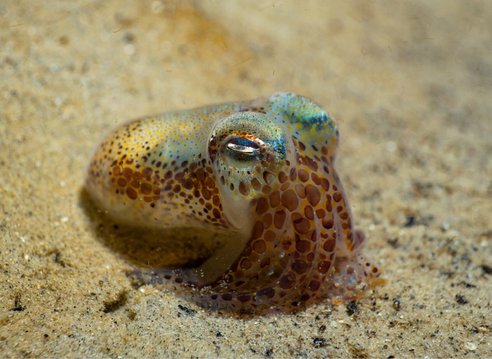
Bobtail squid are a group of cephalopods related to cuttlefish, but they have a rounder mantle and no hard, chalky, internal shell (known as a cuttlebone).
What do they look like?
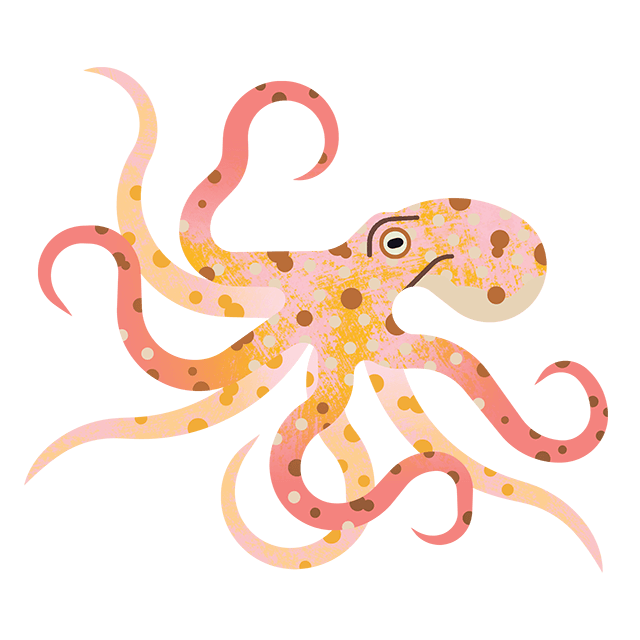
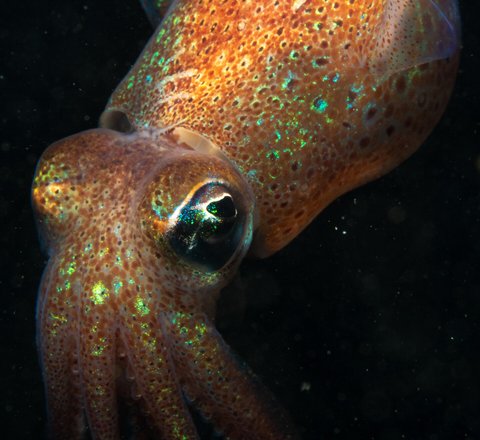
They’re nicknamed “dumpling squid” because they look like little dumplings - too cute! They have pale skin with iridescent spots.
Where can they be found?
Sandy shallows around the UK.
Did you know... Being so small, they have very clever stealth techniques to protect themselves from predators. They use bioluminescent glowing bacteria within their bodies to camouflage themselves by mimicking the moonlight at night and eliminating their own shadows.
Key facts
These little critters are incredibly small at around 6cm - about the size of your thumb.
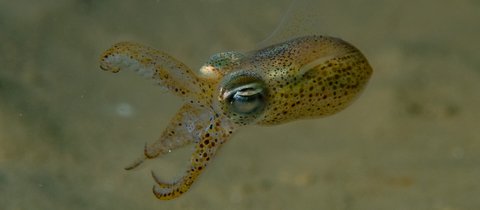
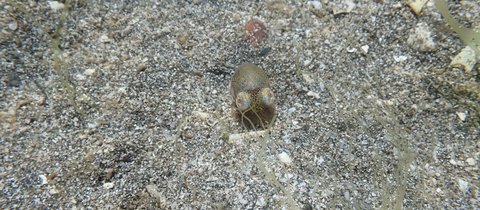
During the day they stay concealed in the sand. If disturbed, they try to blend in by keeping a layer of sand on top of them. If this fails, they release a cloud of ink and leave behind a 'decoy' blob of ink and sand in their shape to help them escape. They can swim by either using the fins on their mantle or by jet propulsion.
| IUCN status | Data Deficient |
|---|---|
| Length | The Atlantic bobtail squid is incredibly small at about 6cm. |
| Weight | Being so tiny, they're also incredibly light, weighing at around 0.1 to 18g. |
| Speed and distance | Bobtail squid prefer a slower pace, travelling at around 2cms a second. They can propel themselves away from predators, but this is a brief spurt of speed. |
| Diet | They eat small crustaceans like shrimp, crabs, and other bottom-dwelling invertebrates. |
| Lifespan | These adorable creatures sadly have a very short lifespan, averaging 3-10 months. |