
From heatwaves to healthy seas: the importance of our ocean against climate change
2 minute read
This week’s record‑breaking heat isn’t just something we feel on land, it’s a signal of what’s happening beneath the surface of our seas.
Our hottest week yet
As temperatures soared across Europe, the UN Secretary‑General, António Guterres, delivered a stark message in London: “London isn’t just calling – it’s cooking. Around the world, climate disasters are becoming more frequent, more destructive, and more costly. And the World Meteorological Organization has warned we “ain’t seen nothing yet.”
Guterres warned that the world breaching the Paris Agreement’s 1.5°C threshold is no longer a distant projection but will happen.
With our ocean absorbing 90% of recent global warming, it is already bearing the brunt.
What is the 1.5 Paris Agreement threshold?
The Paris Agreement commits countries to keep global warming below 2°C and to pursue efforts to limit the rise to 1.5°C above pre‑industrial levels; a threshold scientists say is critical to avoid the most dangerous climate impacts. Breaching 1.5°C, even temporarily, is a warning sign that the long‑term limit is at risk, with every fraction of a degree beyond it increasing the likelihood of extreme heat, ocean disruption, and irreversible ecological damage.
The role of our ocean
Over the past few years, around 90% of our ocean, including UK waters, has been pushed into marine heatwave conditions. Hotter seas become more acidic, stripping oxygen from the water and destabilising the ecosystems that support fisheries and coastal communities. We’re seeing the consequences in the UK already: some fish populations like cod are shifting north, there are more jellyfish and octopus sightings, and extreme marine heatwaves are causing the dieback of cold-adapted habitats like kelp forests, particularly in the south-west of the UK, diminishing vital nursery grounds for many native fish.
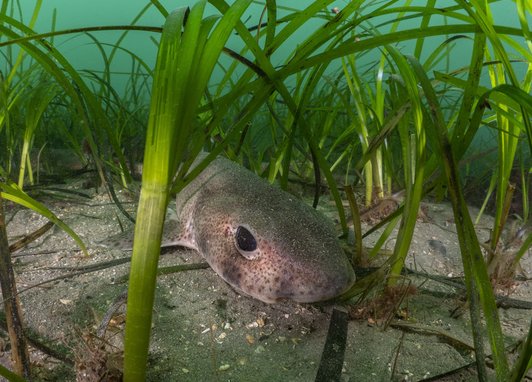
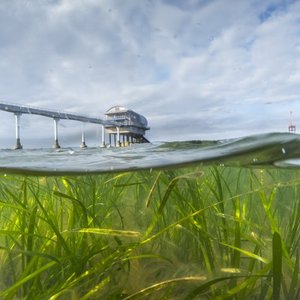
A catshark resting on the ocean floor surrounded by seagrass; a major carbon store | Image credit: Sharron Moran, Ocean Image Bank
Our seas are heating up, and it’s only getting worse. Our ocean is on the front line of our warming planet, and recovering its health is one of our most powerful climate solutions.
Gareth Cunningham, Director of Conservation & Policy
What we need governments to do now
The impacts of climate change are here but the worst outcomes are not inevitable. To protect our ocean, and ourselves, governments must:
- Accelerate emissions cuts in line with the Paris Agreement
- Properly protect our seas from the impacts of pollution
- Make space for nature. Human activities at sea, like offshore wind and fishing, have increased, we need nature positive marine planning that delivers a healthy ocean alongside economic interests
- Rapidly invest in habitat restoration, including seagrass meadows and kelp forests, to rebuild biodiversity and strengthen climate resilience
Our Atlantic Coast Programme
Our Atlantic Coast Programme is regenerating habitats along the UK’s western coast, focussing on four key species - native oysters, seagrass, blue mussels, and kelp - all of which help to recover the health of our seas and make coastal communities more resilient.
Our ocean is a powerhouse against climate breakdown - but only if we restore it. Investing in its regeneration now is one of the most effective ways to build a safer, healthier future for everyone.