

What marine animals can be found in polar waters?
3 minute read
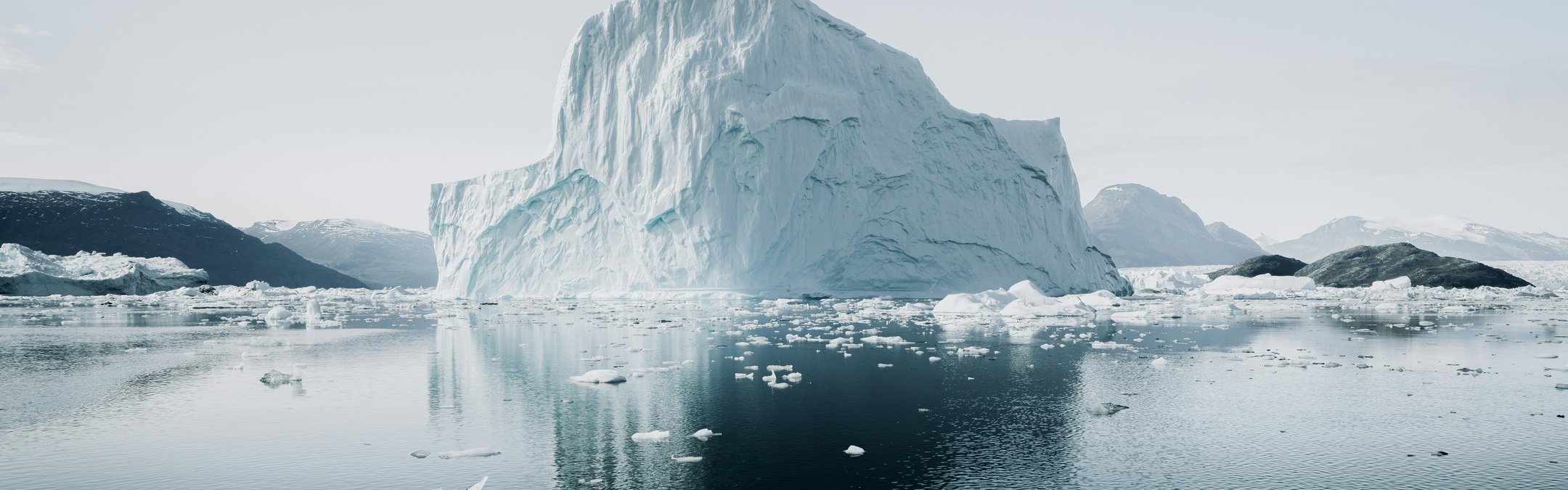
Polar waters are made up of the Arctic Ocean and the Southern Ocean, which surrounds Antarctica. Despite frigid temperatures ranging from -2°C to 3°C and covered with sea ice, there is still plenty of wildlife to be found there.
Blue whales
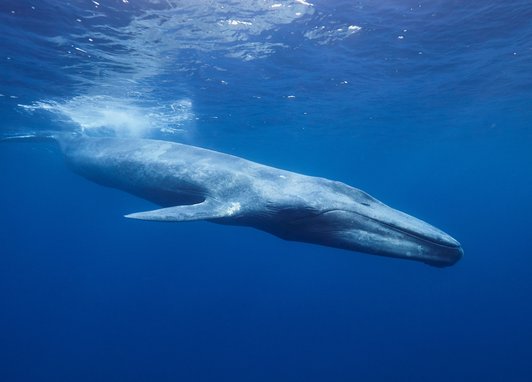
Image credit: Ajit S. N.
Blue whales are one of the loudest animals in the world, using groans and moans to communicate with one another and to navigate through the ocean. It’s believed that at times, their calls can even be heard by other whales up to 1,000 miles away.
These whales spend summers feeding in polar waters, before setting off on long migrations towards the Equator as winter arrives for warmer waters for breeding and nursing. Despite their large size, they almost only eat krill, a type of small crustacean – sometimes, eating up to four tonnes a day.
The species is currently endangered – numbers were decimated by 20th century whaling, but numbers are slowly recovering – highlighting the importance of safeguarding their migratory routes and protecting key feeding and breeding areas.
As well as holding the title for the largest animal that has ever lived on our planet – even bigger than any of the dinosaurs – the blue whale has a tongue the same size as an elephant, it has a heart the same size as a car, and even a small child could crawl through its blood vessels. It’s really hard to put into words how huge this animal is!
Anna Bunney, Citizen Science Programme Developer
King penguins
The king penguin is the second largest penguin species on the planet. It was originally believed to be the biggest – hence the name – before the emperor penguin was identified as a separate, and larger, species in 1884.
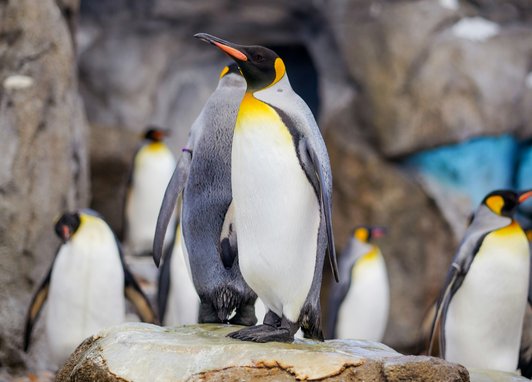
Image credit: Yomex Owo
They primarily feed on lanternfish and squid, often diving hundreds of metres to catch them and reaching speeds of up to six miles per hour. Their torpedo-like shape enables them to glide through the water, where they can hold their breath for up to six minutes.
King penguins are monogamous, so partners will stay together for the whole breeding season, which lasts around 13-16 months – one of the longest among penguin species. Females typically lay one egg each year, which both parents take turns keeping warm in a special ‘brood pouch’ on top of their feet.
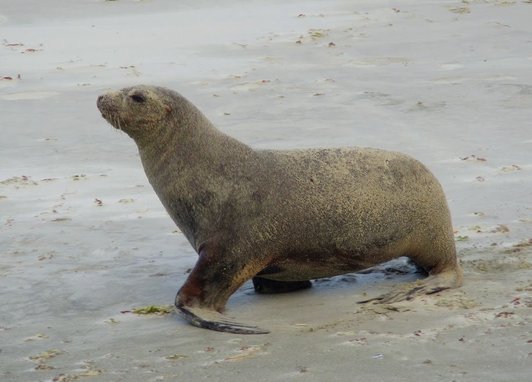
Sea lions
A New Zealand sea lion | Image credit: shaneucsb/inaturalist
93% of New Zealand sea lions are born on these subantarctic islands – 70% on the Auckland Islands and 23% on Campbell Island. These sea lions don’t migrate, and although they do disperse outside of breeding season, they tend to remain in the same area.
This species forages only at sea, where they tend to feed on fish, cephalopods, and crustaceans. Diet and foraging behaviours vary between locations, but those on the subantarctic islands eat yellow octopus, arrow squid, hoki, hake, rattail, opalfish and red cod.
Sea urchins
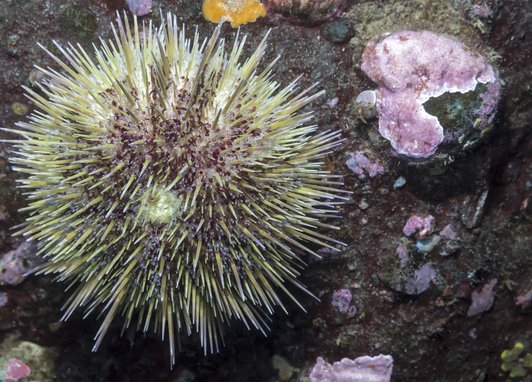
Sea urchins are found in seas all across the world, including the frigid polar waters. In the Arctic, 11 sea urchin species can be found, including the green sea urchin (Strongylocentrotus droebachiensis).
A green sea urchin | Image credit: NatureDiver
Another species found in polar waters is the Antarctic sea urchin (Sterechinus neumayeri). Found in the Southern Ocean, this species feeds on the detritus of other animals and on microalgae. They can live up to 40 years, and like other Antarctic marine invertebrates, grow slowly.
A study found the Antarctic sea urchin can adapt to changes in ocean conditions such as rising temperature and acidification, demonstrating their resilience. Although it took six to eight months for the sea urchins to acclimatise to the lower alkaline content and higher temperature of seawater, the 288 studied all survived and their growth rate was unaffected. However, more research is needed on the impacts on breeding rates.
Bowhead whales
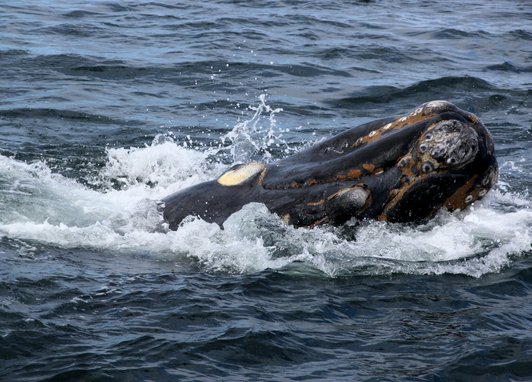
Image credit: Barbara Yuste Zambrano
This species is black in colour, with a bit of white on its lower jaw. They can grow up to 18-20m long and it’s believed they can live for more than 200 years – the longest of any known mammal.
Bowhead whales have the largest mouths of any animal, which helps them eat a whopping 1.8 tonnes a day. They do this by swimming with their mouths wide open, consuming water and filtering plankton, small crustations and fish through their long baleen plates.
Sound is crucial to this species. They’re very vocal and have a large range of calls which they use to find food, avoid predators and navigate through the ice.
The bowhead whale is one of the most fascinating, yet illusive, whales on our planet. It’s a bit of a record breaker! As well as being the longest living marine mammal on the planet, they have the thickest blubber of any species of whale, which helps with thermal insulation, energy storage, buoyancy and can also offer some protection against predators.
Anna Bunney, Citizen Science Programme Developer at the Marine Conservation Society
Support our blue planet
The ocean is home to an extraordinary diversity of life, but it faces growing threats from climate change, human activity, habitat destruction and pollution. Your support helps fund vital science-based conservation, research, and restoration projects that make a real difference.