

A deep dive into sea urchins
2 minute read
There’s a good chance you’ve come across a sea urchin while at the beach, but what exactly are these delicate, sometimes spiky shell-like globes? We take a closer look at these intriguing creatures.
What is a sea urchin?
Sea urchins are a type of animal, specifically, a spiny marine invertebrate known as Echinodermata, meaning ‘spiky-skinned’.
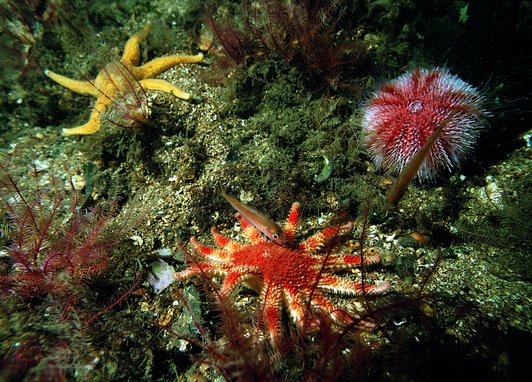
Paul Naylor | Image credit: A sea urchin and starfish
What do sea urchins eat?
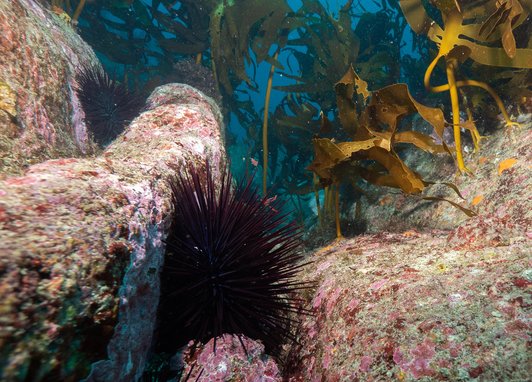
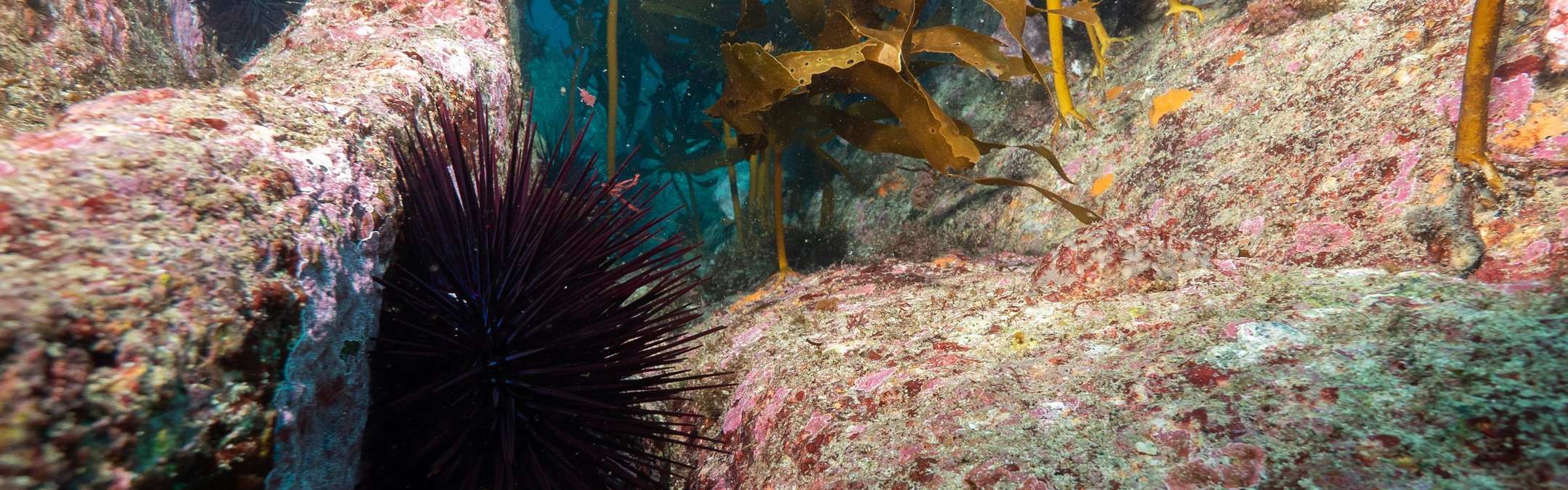
Sea urchin eating kelp | Image credit: Stefan Andrews/Ocean Image Bank
How do they eat?
Sea urchins’ mouths are on the underside of their bodies. As they move around, they scrape algae into their mouths using an ‘Aristotle’s lantern’. This complex five-sided structure includes jaws, teeth-like plates made of calcium carbonate, and specialised muscles to control them.
As they constantly scrape their teeth against hard rocks, their teeth wear away over time. Fortunately, sea urchins have continuously growing teeth, which means new layers replace the worn teeth keeping them sharp and effective throughout the urchin's life.
What predators eat sea urchins?
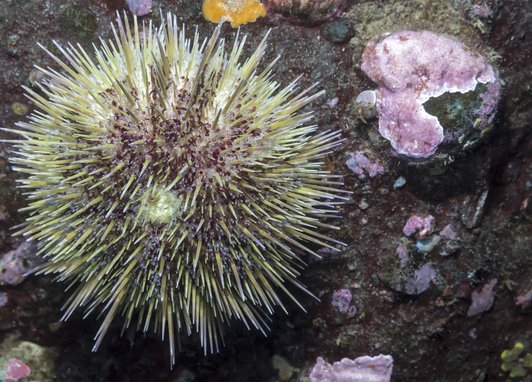
A green sea urchin | Image credit: NatureDiver
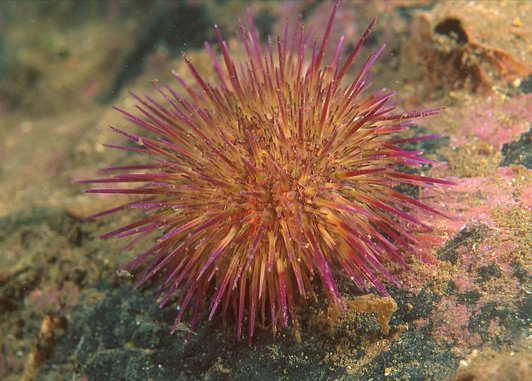
An orange coloured sea urchin | Image credit: Rohan Holt
Why do sea urchins wear hats?
It might sound odd, but many sea urchins will actively pick up items from the seafloor using their feet and spines to wear them. Things like pebbles, shells or even human litter like bottle caps and coins have been recorded as some of a sea urchin's accessories. This is not a fashion statement, however; they just add these items to act as camouflage – protecting them from predators – shield them from strong light in shallow water and possibly make themselves heavier so that they aren't pulled across by strong currents. Sea urchins can also adjust the hat depending on changing conditions. Despite this complex behaviour, sea urchins do not have a brain, so these actions are simply an instinctive response rather than a conscious decision.

What sea urchins are found in the UK?
Three species of sea urchin can be found in UK waters: the common sea urchin, the green sea urchin, and the small common heart urchin (known as a ‘sea potato’).
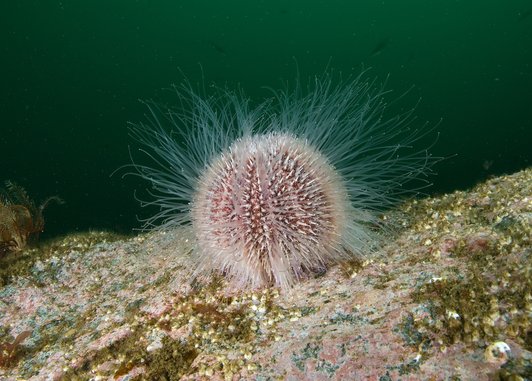
A common sea urchin seen around Loch Carron | Image credit: Paul Naylor
The green sea urchin is much smaller (growing up to 5cm), but its long, purple-tipped spines make it look bigger than it is. This species has a flattened shape.
It’s often found among seaweed and kelp, which it feeds on, but you may also see them on rocks that are exposed at low tide. It lives in waters around the UK, but particularly in the North Sea.
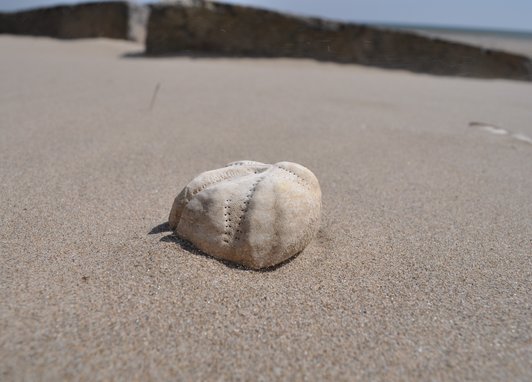
A heart urchin on a Pembrokeshire beach | Image credit: Richard Harrington
Are they poisonous?
While some species of sea urchin are venomous, those native to the UK waters aren’t. Stepping on them can be painful due to their spikey spines, however, and there is a risk of the wound becoming infected, so it’s still worth being careful while at the coast.
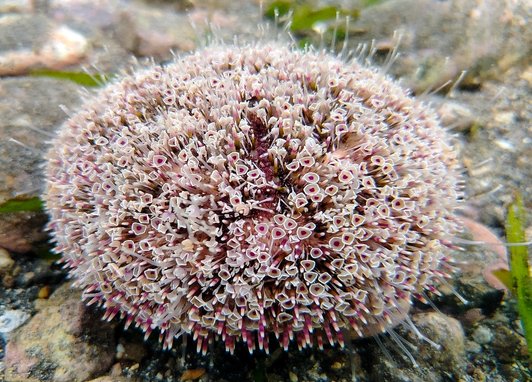
A flower urchin | Image credit: April_Rose/inaturalist
Support our blue planet
The ocean is home to an extraordinary diversity of life, but it faces growing threats from climate change, human activity, habitat destruction and pollution. Your support helps fund vital science-based conservation, research, and restoration projects that make a real difference.