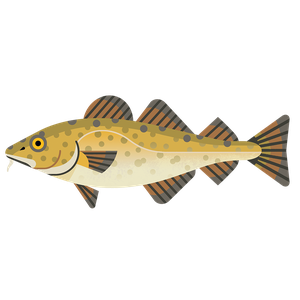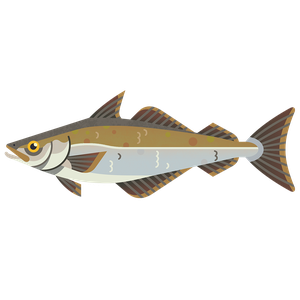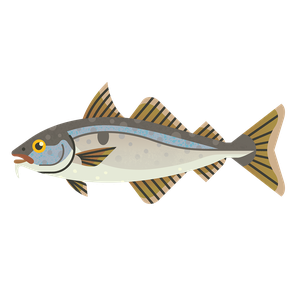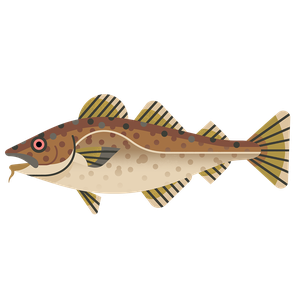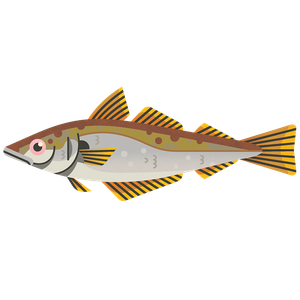

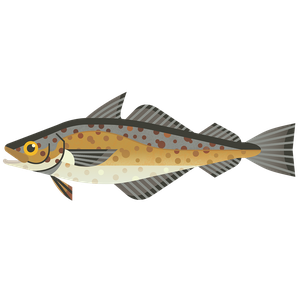
European hake
Merluccius merluccius
What to check for
Location
Location
Location refers to two things:
- Where the fish population or stock lives, e.g., North Sea, or South Pacific.
- Who is managing the fishery. If it says “All areas”, this means that our scoring for management covers the same area as the fish stock.
Northern stock (North Sea, Celtic Seas, Bay of Biscay (north)): Bay of Biscay
Technical location
Technical location
A global system is used to split the ocean into different zones, areas, and subdivisions. Each zone is indicated by a number and/or letter. By law, this must be shown on all unprocessed seafood sold in the EU and UK, alongside the fishing method used to catch it. Look for these details on the packet to match your seafood to our ratings.
8b: Bay of Biscay (Central), 8a: Bay of Biscay (North), 8d: Bay of Biscay (Offshore), 7: Irish Sea, Porcupine Bank, English Channel, Bristol Channel, Celtic Seas, West and Southwest of Ireland, 4: North Sea, 6: Rockall, West of Scotland, 3a: Skagerrak and Kattegat
Caught by
Caught by
Net (gill or fixed)
Gillnetting uses a net, suspended in the water, that is anchored to the seabed. It is kept vertical by buoys, to create a wall of netting that fish swim into and become entangled. The mesh size and length of time the nets are left at sea varies, depending on where they are fishing and what they are targeting.
Net (pelagic trawl)
Pelagic trawling involves towing a net through mid-water or at the surface, usually without touching the seabed. It can be towed by one boat or a pair of boats. Shoals of fish are targeted using equipment such as sonar.
Net (gill or fixed), Net (pelagic trawl)
Rating summary
Northern hake is fully fished, but not subject to overfishing. Emergency management of this stock in 2001 has recovered it to very good levels. Ongoing management measures appear to be controlling the fishery, but there is an unsustainable bycatch of common dolphin and harbour porpoise in the Bay of Biscay. Gillnetting and pair trawling for hake are among the fisheries responsible.
Rating last updated July 2026.
How we worked out this Rating
Please note this rating uses our new methodology.
Stock status
The size and health of a fish population, or 'stock', that is being targeted by fishermen is a crucial indicator of whether a fishery is sustainable. If the stock is too small to withstand fishing, it is at risk of crashing. We look at how big the stock is, and how much pressure there is from fishing, to assess this. The target level that many fisheries aim for is 'Maximum Sustainable Yield' - the most fish that can be caught year after year whilst keeping the population at a healthy size.
Stock Status Score: 0.25
Northern hake is fully fished and not subject to overfishing.
Stock assessments are carried out by the International Council for the Exploration of the Sea (ICES). The most recent assessment was published in 2026 using data up to 2026. The next assessment is expected in 2027.
The stock assessment defines reference points for fishing pressure (F) and biomass (B). For fishing pressure, there is a target to keep F at or below Maximum Sustainable Yield (MSY). For biomass, there is no target. However, there is a trigger point (MSY Btrigger). Below this level, F should be reduced to allow the stock to increase. Because BMSY is not defined, the Good Fish Guide applies its own definition of 1.4 x MSY Btrigger.
The stock assessment was benchmarked in 2022. Estimates of spawning stock biomass (SSB) now only include females, whereas previously they included males as well.
The spawning-stock biomass (SSB) has increased substantially from being below biologically safe levels (Blim) in 2006 (around 45,000 tonnes) to peak at around 293,000t in 2015. It has since declined to 98,611 t in 2026. This is still above MSY Btrigger (78,405t) but has dropped below the GFG proxy for BMSY (109,767t). The stock is therefore not in an overfished state.
Fishing mortality (F) decreased significantly between 2005 and 2012, and has been fluctuating at or below levels associated with Maximum Sustainable Yield (FMSY, 0.24) since 2009. In 2025 it was 0.24, equal to FMSY. The stock is therefore not subject to overfishing.
ICES advises that when the MSY approach is applied, catches in 2027 should be no more than 46,824 tonnes. This is a 15% decrease on the previous year's advice, because of the decreasing trend in stock size.
There is some uncertainty in this stock assessment. The biomass surveys don't cover the entire stock distribution area, and changes in distribution are known to increase uncertainty in the assessment. Analyses show that the new assessment tends to revise historical SSB downwards and F upwards when a new year’s data is added. If this pattern continues, this may result in an inflated advised catch.
Management
Good management is vital to be sure that fishing doesn't cause fish populations to decline. We look at whether regulations follow the best available scientific advice, how well compliance is monitored and enforced, and whether this is effective in maintaining healthy fish stocks.
Management of the Target Stock Score: 0.5
Alignment with Scientific Advice Score: 0.25
Monitoring, Control and Surveillance Score: 0.5
Emergency management of this stock in 2001 has recovered it to very good levels. Ongoing management measures appear to be controlling exploitation of hake. However, in the Bay of Biscay management has failed to address the impact of the fishery on dolphins and porpoises. Infringement proceedings have been initiated.
Hake fishing in the Bay of Biscay is primarily carried out by France and Spain. Bycatch of common dolphin and harbour porpoise in this area appears to be contributing to population-level declines. European legislation does not define a bycatch limit, but it does require countries to reduce and where possible eliminate cetacean bycatch. France and Spain have failed to take the required actions and infringement proceedings have been started by the EU. France’s state council has also ruled that action must be taken.
Additional management information on the wider hake fishery is below.
Northern hake is a shared stock between the UK, EU, and Norway. There is no joint management plan, although one is being considered. The main management measure is to set catch limits (Total Allowable Catches, TACs).
ICES recommends catch limits for the northern hake stock as a whole. However, TACs apply only to the UK and EU member states and waters, so there is potential for overfishing if other states are accessing the stock (e.g. Norway). The agreed TACs were set in line with scientific advice for some of the last 5 years (2022 – 2026) However, in 2022 and 2025, the TACs exceeded the advice by 5% and 6% respectively. In both cases, ICES had recommended a greater than 20% decrease in catch, but hake TACs can't change by more than 20% in one year, so TACs remained above the advice.
Between 2021 and 2025, actual catches remained below the scientific advice. This could be an indication that the stock biomass has been overestimated. Caution is needed because hake are fast growing with a high natural mortality rate, so if the biomass starts to decline it could drop rapidly. A Harvest Control Rule would help to mitigate this, as it would reduce exploitation rates when certain biological reference points are approached.
Overall, currently, catch limits appear to be set in line with scientific advice and actual catches are within these limits.
Other measures include:
- Minimum conservation reference size: hake can legally be caught and sold at 27cm (30cm in Skagerrak and Kattegat). Below this size, hake have to be landed but can't be sold for human consumption and so have a lower value. Hake mature at around 35-45cm, so this doesn't prevent juveniles from being caught.
- Landing obligation: it is illegal to discard unwanted (e.g. below-minimum-size, BMS) hake at sea. Overall, around 6% of the catch has been discarded in the last three years, and discarding rates have decreased since 2015. However, discarding of juvenile hake (both above and below MCRS) can be substantial in some areas and fleets, particularly gillnetting. Recently, discarding of large individuals increased because of quota restrictions in certain fleets. Continued monitoring is required.
An Emergency Plan was brought in in 2001 to recover the stock, involving a TAC reduction and minimum mesh size of 100mm (depending on vessel size, location and proportion of hake in the total catch). It included targets for increasing stock size and reducing fishing mortality, and limited changes in TAC from year to year. The stock is now in a very good state, and fishing pressure is at sustainable levels, although this has been strongly influenced by good spawning years in 2008 and 2012.
The EU and UK both have fishery management measures, which can include catch limits, population targets, and gear restrictions. However, compliance in the EU and UK has been inconsistent, with ongoing challenges in implementing some regulations. The goal of reaching Maximum Sustainable Yield (MSY) by 2020 was missed, with less than half of UK TACs in 2024 following ICES advice. In 2024, the EU and UK reaffirmed their commitment to sustainable fisheries by aligning management with scientific advice to gradually approach MSY. However, no new target date has been set for achieving MSY across all fisheries. The Landing Obligation (LO), an EU law retained by the UK post-Brexit, requires all quota fish to be landed, even if unwanted (over-quota or below minimum size). It aims to encourage more selective fishing methods, reduce bycatch, and improve catch reporting. However, compliance is poor, and accurate discard levels are hard to quantify with current monitoring programmes. The UK is in the process of replacing the LO with country-specific Catching Policies.
The Marine Conservation Society views Remote Electronic Monitoring (REM) with cameras is one of the most cost-effective tools for providing reliable fisheries data and aiding informed management decisions. Fully monitored fisheries enhance collaboration, data accuracy, stock recovery, and reduce impacts on marine wildlife and habitats. However, the full potential of REM may only be achieved when it tracks fishing location and documents catch and bycatch, particularly where vulnerable species and habitats are at risk. As of January 2024, the EU is introducing a Remote Electronic Monitoring (REM) mandate for EU vessels, including CCTV cameras on vessels 18m or more that pose a potential risk of non-compliance, within the next 4 years. Across the UK, different approaches to REM are being taken and legislation is expected to be in place across all 4 countries within the next few years.
The Fisheries Act (2020) requires the development of Fisheries Management Plans (FMPs) (replacing EU Multi-Annual Plans) in the UK. 43 FMPs have been proposed and are at various stages of development and implementation, these should all be published by the end of 2028. FMPs have the potential to be very important tools for managing UK fisheries, although data limitations may delay them for some stocks. It is also essential the UK governments define and adopt a standardised approach or model across the four nations to a universally defined FMP design, to ensure the consistence, quality and coherence of all the proposal FMPs.
The Marine Conservation Society is keen to see publicly available Fishery Management Plans for all commercially exploited stocks, especially where stocks are depleted, that include:
- An overview of the fishery including current stock status, spatial coverage, current fishing methods and impacts
- Targets for fishing pressure and biomass, and additional management when those targets are not being met, based on the best scientific evidence
- Timeframes for stock recovery
- Improved data collection, transparency, and accountability, supported by technologies such as Remote Electronic Monitoring (REM)
- Consideration of wider environmental impacts of the fishery, including habitat impacts and minimising bycatch
- Stakeholder engagement
Capture method
Environmental impacts of fishing vary hugely, depending on the method used and where it's happening. We look at whether the fishing gear being used could have an effect on seabed habitats, and if so, how severe might this be. We also review whether it catches any other species by accident (bycatch), and what effect this might have on those species - especially if they're Endangered, Threatened, or Protected.
Capture Method Score: 1
Habitat Impacts: 0
Bycatch Impacts: 0.25
Vulnerable and ETP Species: 1
Ecosystems and Trophic Webs: 0.5
There is an unsustainable bycatch of common dolphin and harbour porpoise in the Bay of Biscay. Gillnetting and pair trawling for hake are among the fisheries responsible.
Hake is caught by longlines, gillnets, and bottom trawls in mixed fisheries alongside megrim, anglerfish and Norway lobster.
There is concern for bycatch of dolphins and porpoises in the Bay of Biscay, as they are attracted to nets to feed on the species being caught. Hake fishing in this area appears to be contributing to population-level effects for some cetaceans. European legislation does not define a bycatch limit, but it does require countries to reduce and where possible eliminate cetacean bycatch.
The Northeast Atlantic European common dolphin population is estimated to be 634,286 individuals. ICES have suggested a bycatch threshold of 4,927 individuals. Bycatch data is poor because observer coverage is poor, generally below 3% for most fleets. Strandings data is also available, but it is difficult to know which gears are responsible and not all dead animals are washed ashore. Estimated annual bycatch in the Bay of Biscay and Iberian Coast for 2019-2021 ranges from 5,938 individuals (observer data) to 9,040 (strandings data). This is above the suggested limit and does not include bycatch from other regions. Therefore, bycatch is likely to be above sustainable limits. Modelling of current bycatch rates suggests population decline over the long term.
Fishing here is primarily by French and Spanish fleets. Based on observer data, gears include trammel netting, which targets bass, monkfish and sole, and caught over 2,000 dolphins annually from 2016-2021. Purse seining for small pelagic species, including sardine and anchovy, caught over 1,000 dolphins annually from 2019-2021. Midwater otter trawl and midwater and bottom pair trawlers, which target hake and bass, caught over 1,000 dolphins annually from 2016-2018 and around 800 from 2019-2021. Pair trawling for hake uses a net with a very high vertical opening of up to 25 metres, which increases the risk of dolphin bycatch, although this has reduced following the introduction of mandatory pingers to deter dolphins. Set gillnets, which target hake and monkfish, caught over 500 dolphins annually from 2019-2021.
A coalition of environmental groups has recommended a series of measures to reduce bycatch. Proposals include winter closures to avoid peak bycatch season, move-on rules to leave areas of high bycatch, pingers, daylight fishing, and better monitoring. Few of these have been implemented. There are requirements under EU law to reduce bycatch and improve monitoring, but France and Spain have failed to deliver. Infringement proceedings have been started, requiring them to act. France’s state council has also ruled that action must be taken.
The Iberian harbour porpoise population is much less well understood. It is estimated to be around 2,900 animals. A bycatch threshold of 25 individuals has been suggested. Data on bycatch levels for this species are very poor, but 500-1,000 individuals could be caught annually, based observer and strandings data. This is far above sustainable levels. Genetic data indicates that the population may be declining. Most bycatch is by gillnets and the target species include cod, hake, turbot, monkfish and lumpfish.
Other species bycaught by gillnets in this area include the endangered common skate complex, six-gilled and basking sharks, common guillemot, European shag, and shearwaters. There is not enough data for rare species that are highly susceptible to bycatch such as leatherback turtle, European sturgeon and great white shark. Better data is needed to understand population impacts.
Because of gillnets' durability (they are made of nylon), if lost, they can continue to fish for several weeks before becoming tangled and bundled up, a phenomenon known as 'ghost fishing'. However, static nets, as with all gear, represent an investment by fishermen, and therefore there are incentives to avoid losing or damaging gear.
References
EU, 2022. July Infringements package: key decisions. Available at https://ec.europa.eu/commission/presscorner/detail/EN/inf_22_3768 [Accessed on 21.07.2023].
ICES, 2020. Workshop on fisheries Emergency Measures to minimize Bycatch of short-beaked common dolphins in the Bay of Biscay and harbour porpoise in the Baltic Sea (WKEMBYC). ICES Scientific Reports. 2:43. 295 pp. https://doi.org/10.17895/ices.pub.7472.
ICES, 2026. Working Group for the Bay of Biscay and Iberian Waters Ecoregion (WGBIE). ICES Scientific Reports. 8:46. 685 pp. Available at https://doi.org/10.17895/ices.pub.32790321 [Accessed on 21.07.2026].
ICES, 2026. Hake (Merluccius merluccius) in subareas 4, 6, and 7, and in divisions 3.a, 8.a–b, and 8.d, Northern stock (Greater North Sea, Celtic Seas, and the northern Bay of Biscay). In Report of the ICES Advisory Committee, 2026. ICES Advice 2026, hke.27.3a46-8abd. Available at https://doi.org/10.17895/ices.advice.30932108 [Accessed on 21.07.2026].
ICES, 2023. ICES Ecosystem Overviews Technical Guidelines. Version 4. ICES Guidelines and Policies - Advice Technical Guidelines. 24 pp. Available at https://doi.org/10.17895/ices.pub.22059803 [Accessed on 21.07.2026].
ICES, 2023. EU additional request on mitigation measures to reduce by-catches of common dolphin (Delphinus delphis) in the Bay of Biscay. In Report of the ICES Advisory Committee, 2023. ICES Advice 2023, sr.2023.01. https://doi.org/10.17895/ices.advice.21946634.
ICES, 2024 Bay of Biscay and the Iberian Coast ecoregion – fisheries Overview. In Report of the ICES Advisory Committee, 2024. ICES Advice 2024, section 6.2. Available at https://doi.org/10.17895/ices.advice.27879951 [Accessed on 21.07.2026].
ICES. 2024. Bycatch of endangered, threatened and protected species of marine mammals, seabirds and marine turtles, and selected fish species of bycatch relevance. In Report of the ICES Advisory Committee, 2024. ICES Advice 2024, byc.eu. Available at https://doi.org/10.17895/ices.advice.27999401 [Accessed on 21.07.2026].
ICES, 2025. Working Group on the Bycatch of Protected Species (WGBYC). ICES Scientific Reports. 7:112. 181 pp. Available at https://doi.org/10.17895/ices.pub.30610370 [Accessed on 21.07.2026].
ICES, 2026. Working Group for the Bay of Biscay and Iberian Waters Ecoregion (WGBIE). ICES Scientific Reports. 8:46. 685 pp. Available at https://doi.org/10.17895/ices.pub.32790321 [Accessed on 21.07.2026].
ICES, 2026. Hake (Merluccius merluccius) in subareas 4, 6, and 7, and in divisions 3.a, 8.a–b, and 8.d, Northern stock (Greater North Sea, Celtic Seas, and the northern Bay of Biscay). In Report of the ICES Advisory Committee, 2026. ICES Advice 2026, hke.27.3a46-8abd. Available at https://doi.org/10.17895/ices.advice.30932108 [Accessed on 21.07.2026].
North Atlantic Marine Mammal Commission and the Norwegian Institute of Marine Research, 2019. Report of Joint IMR/NAMMCO International Workshop on the Status of Harbour Porpoises in the North Atlantic. Tromsø, Norway. Available at https://nammco.no/wp-content/uploads/2020/03/final-report_hpws_2018_rev2020.pdf [Accessed on 21.07.2026].
Piñeiro, C. and Saínza, M, 2003. Age estimation, growth and maturity of the European hake (Merluccius merluccius (Linnaeus, 1758)) from Iberian Atlantic waters. ICES Journal of Marine Science, 60: 5, pp 1086–1102. https://doi.org/10.1016/S1054-3139(03)00086-9
Sustainable swaps
Learn more about how we calculate our sustainability ratings.
How our ratings work
Add impact to your inbox
Join the movement: get updates on the issues you care about.
We'll email you inspiring stories about the work we're doing to save and recover our oceans, and news about our urgent campaigns for positive change.